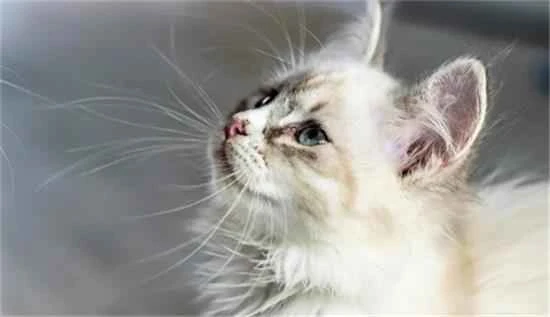
The Bengal cat has a broad, modified wedge-shaped head with a rounded outline. The head is relatively long and wide. While the head is slightly small in proportion to the body, it shouldn't be excessively small.
The skull forms a gentle curve behind the ears, flowing down to the neck. Adult male cats have broad jaws. Overall, the head should appear more wild than other domestic cat breeds.
From a zoological perspective, "Bengal cat" and "leopard cat" are not the same species. The Bengal cat is a pet cat, while the leopard cat is a wild, untamed feline. However, many people prefer the abbreviation, but for pet purposes, both names refer to the same animal: the Bengal cat. 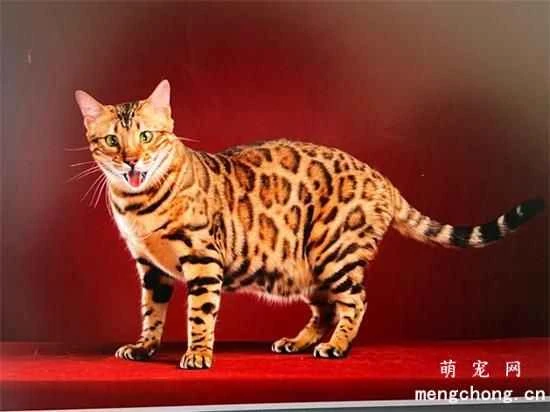
Below, PetCat.com will introduce the detailed characteristics of the Bengal cat:
Overall description
The goal of the Leopard Cat breeding program is to develop a domestic cat that possesses the physical characteristics of the Asian Leopard Cat, yet retains the gentle and reliable temperament of a domestic feline. The Leopard Cat is an athletic animal, alert to its surroundings; friendly, curious, and confident, it possesses strength, agility, balance, and elegance. It is a medium to large cat, exhibiting muscular beauty and a slender body. The Leopard Cat's prominent muzzle, large, nearly round eyes, and somewhat small head give it a wild appearance. Its concave side profile is smooth and almost straight, and its relatively short ears with wide bases and rounded tips further enhance its uniqueness. Its short, dense coat has a unique softness and silky feel. Its coat may or may not have glitter; either way, it is quite beautiful. A thick, low-hanging, medium to long tail further enhances its balance and beauty.
ear
Medium to small, with a broad ear base and rounded ear tips. Viewed from the side, the ear tips should point forward. A little bit of feathering is acceptable, but ear tips like a serval's (meaning too much feathering) are undesirable.
Eye
Oval-shaped, very close to round. The eyes are set wide apart and slightly slanted towards the base of the ears. Eye color is unrelated to fur color. The darker and more intense the eye color, the better. Chin
A strong chin that, when viewed from the side, forms a straight line with the tip of the nose.
mouth
It is full and broad, with a large and prominent mouth and nose, and high and prominent cheekbones.
nose
Large and broad; the skin appears slightly loose.
contour
The forehead forms a gentle curve that extends uninterruptedly to the bridge of the nose. The bridge of the nose extends outward beyond the eyes; its contour extends to the tip of the nose, forming a slight, almost straight, concave curve.
neck
Long, sturdy, and strong; perfectly proportioned to the body.
Body
trunk
Tall and sturdy, neither Eastern nor foreign in shape. Medium to large.
Legs
Medium length, with the hind legs slightly longer than the forelegs.
soles of feet
Thick, round, with prominent joints.
Tail
Medium length, slender, with a rounded, conical shape at the end.
Bone structure
Strong and sturdy; it will never feel delicate.
muscle
Extremely strong—especially the males—is one of the key characteristics of their appearance.
Fur/Color/Pattern
length
Short to medium length. Kittens are allowed to have longer fur (downy coat).
tactile
Dense and luxurious, unusually soft and with a silky touch.
stripes
There are two types: spotted and marble (details omitted in this article).
spot
Randomly scattered spots, or arranged horizontally. Rosette patterns (details below) show two or three distinct colors or gradients (a rosette pattern refers to spots with varying shades—darker on the outside and lighter in the center, making them resemble a beautiful rose). Some rosette patterns resemble footprints or arrowheads. Rosette patterns are preferred over coin-shaped spots (that is, spots shaped like rosettes, round or semi-circular with gradient tones, are better than single, coin-shaped spots). The rosette pattern must contrast with the base coat color, creating a distinct pattern and clear borders. A white belly is preferred. Striped shoulders, spots on the legs, and spots or rosette patterns on the tail are preferred. Spots are essential on the belly.
Translator's Note: Breeders generally classify spotted patterns into two types: coin-shaped and rosette. Coin-shaped spots typically refer to small, uniform spots, like cheetah spots, without any color variation. Rosette, also known as 'rosette,' is another type of spotted pattern, referring to larger, round, semi-circular, or irregularly shaped spots, similar to cheetah spots. These circles have darker edges that lighten towards the center, creating a color variation, much like the layered coloring of a rose, hence the name 'rosette.' In the TICA standard, 'rosette' scores higher than 'coin-shaped'!
color
TICA officially recognizes three colors: 'gold', 'snow', and 'silver'.
Note: Since silver is not mentioned in the TICA 2004 standard for leopard cats, it will not be discussed further.
Golden Leopard
All variations of brown are permitted; however, a warm reddish-brown is preferred. The color of the markings can range from brown to black. White on the chin, abdomen, and inner thighs is preferred.
snow leopard
There are different variations, such as Seal-Sepla (ivory jade), Seal-Mink (mink jade), and Seal-Lynn-Point (ivory blue diamond).
Translator's Note: Simply put, "snow leopard" generally refers to leopard cats that are "white with a hint of brown or milky color," with less distinct spots (the spots are various shades of brown). Snow leopards can be classified into three types (ivory emerald, mink emerald, and ivory blue diamond). Ivory emeralds and ivory blue diamonds both have an ivory-colored base coat, but the difference lies in their eyes: ivory emeralds have emerald-green eyes, while ivory blue diamonds have sapphire-like eyes. Mink emeralds are similar to ivory emeralds, the only difference being that their base coat is a bright, almost snow-white light brown, like the color of mink fur. Those unfamiliar with snow leopards may mistake them for "silver leopards," but the white on a silver leopard is very pure white (influenced by the dominant silver gene), and its spots are quite distinct (deep black), creating a striking contrast between the dark black of the spots and the silver base coat (bright white).