Nursing cats need more nutrition to maintain their energy metabolism and to feed their kittens. Newborn kittens also need enough milk to maintain their health and growth. If the mother cat does not produce enough milk during this period, it will cause serious problems. Below, we will discuss some issues that need to be considered when nursing cats. 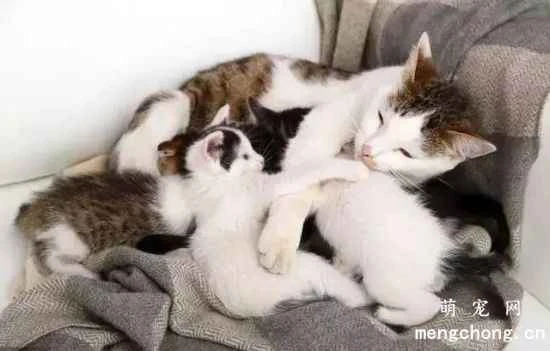
I. Cat colostrum and immune system
Colostrum produced within one or two days after birth contains abundant immunoglobulins. These antibodies are not digested and are absorbed into the newborn kitten's bloodstream during the first 24 hours of its life, thus providing protection against disease (including common bacteria and viruses that the mother cat has been vaccinated against). This immune protection lasts for 4 to 6 weeks, after which the kitten's immune system gradually matures and eventually becomes capable of resisting viral infections.
II. The following conditions may occur during breastfeeding:
1. No milk production: Some female cats are completely unable to produce milk. Although this is rare, it can be a challenging issue for breeders who are expected to fully assume the role of mother.
2. Insufficient breast milk production: As kittens grow and develop, their need for breast milk gradually increases, peaking in the third or fourth week, after which they enter the weaning period. Therefore, if the kitten is large or the mother cat's milk production is insufficient, the breast milk may not be enough to meet their growth and development needs, and supplemental milk products may be necessary until weaning.
3. Symptoms of toxic milk: If the mother cat has mastitis, viruses or bacteria can enter the milk, causing diarrhea in the kittens, which can then lead to death. In this case, breastfeeding must be stopped immediately and replaced with formula. Prolonged labor or dystocia often leads to mastitis.
4. Newborn kitten erythrocyte lysis: If the kitten's blood is incompatible with the mother cat's blood, they should be separated for 24-36 hours after birth to prevent the kitten from suckling the mother cat's colostrum.
5. Medications in breast milk: Many medications, especially antibiotics, can pass into breast milk after administration, disrupting the gut microbiota and causing diarrhea in kittens. If the mother cat must receive medication, the potential adverse effects on her kittens must be considered. 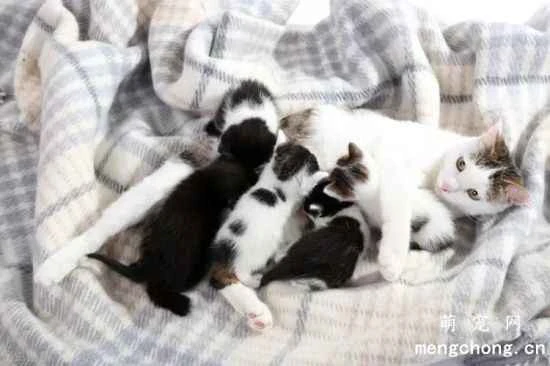
III. How to handle breastfeeding issues
For whatever reason, if kittens are unable to receive colostrum within 24 hours of birth, a substitute must be found. Kittens that haven't received colostrum lack immune protection and are particularly vulnerable to infection before the fifth week. Common bacterial infections can be fatal to kittens, with a very high mortality rate. Currently, there are no true colostrum substitutes on the market that can supplement the antibodies in kittens to fight off disease. Therefore, breeders must find a solution within a short period (within 24 hours).
If there are other nursing mother cats, this is the simplest solution: place the kittens directly next to their mother to suckle colostrum (if they were born on the same day) or breast milk (if they were born around the same time). Unlike dogs, cat milk always contains antibodies, with the highest antibody content found in colostrum.
The second method requires prior planning. Collect milk (preferably colostrum) from a healthy lactating mother cat, freeze it in a thawable container, and thaw it in a water bath at 37°C when needed (do not use a microwave). 1-2 ml orally is sufficient for each kitten. While this method is more cumbersome (expressing milk from the mother cat is not easy), it is a very effective method for kittens that cannot access colostrum.
If the above methods are not feasible, there is another option. Blood can be drawn from a healthy animal that was vaccinated that day at the cattery (beware of infectious diseases!), and the extracted serum can be injected into the kitten. Of course, only a veterinarian can perform this procedure. In any case, it is important to ensure that the blood of the nursing mother cat or donated serum is incompatible with the kitten's blood to prevent hemolysis in the kitten.
IV. About weaning kittens
To stimulate the kittens' appetite, first confine the mother cat and let the kittens go hungry for a while. Cook rice porridge or a thin batter, adding a little fish broth for extra nutrition. Note that the broth should not be oily, otherwise the kittens will get diarrhea. Find a small piece of wood (like the stick from an ice pop) or a small spoon, dip it in the rice porridge, and put it in the kitten's mouth for it to suck on. Feed them about four times a day, not a large amount at once, just small amounts to cultivate their appetite. At first, it might be difficult for the kittens to suckle, but once they discover the taste, they will love it. Remember to release the mother cat after feeding; the accumulated milk will provide the kittens with a full meal.
After feeding them for a while, usually a week, or even just one or two days, the kittens will develop the desire and urge to eat on their own. At this point, you can consider letting the kittens eat on their own. Confine the mother cat and let the kittens go hungry for a bit. Put some soft food in a dish, then take the kitten and bring its mouth to the food so it knows the food is in the dish. Try this a few times, and it will learn to eat on its own. Once the kittens are fairly full, release the mother cat.
The food bowl doesn't need to be moved; leave it next to the cat's nest. This way, the kittens will imitate their mother when she eats and will also eat. When the mother cat isn't around, they can eat on their own. Some kittens are very stubborn and will refuse to eat anything until they are naturally weaned, preferring to go hungry. In that case, you need to find a way to make them reject their mother's milk. Apply some bitter juice, such as bile or bitter melon juice, to the mother cat's nipples to make the kittens reject their mother's milk. While still providing food, they will then have the desire to eat. For an even more drastic approach, directly feed them a little bit of bitter juice to make them uncomfortable before feeding them food. They will need to dilute the bitterness and will naturally eat then.
Cats expend a lot of energy during the entire nursing period. A balance needs to be reached between the kittens and the mother cat. In the early stages of nursing, the mother cat's milk can sustain the kittens' growth, but in the later stages, milk production begins to decrease, which is when it is time to wean the kittens.