Characteristics of the Russian Blue cat:
1. Body shape. The Russian Blue cat has a slender body, a short and wedge-shaped head, a straight nose without a nasal break, large and erect pointed ears, small and round paws, and walks as if on tiptoe. Each of its front paws has five toes, and each of its hind paws has four toes.
2. Fur. The Russian Blue cat has a short, silvery-blue coat with a velvety texture and feel. The undercoat provides warmth and comes in gray and blue-gray, giving it a silvery-gray sheen similar to mink fur, hence the name "Russian Blue." Combined with its slender body and graceful gait, it exudes an aristocratic air among cats.
3. Temperament. Russian Blue cats are quiet and shy, with soft voices. They are playful, timid, prefer quiet environments, are conservative and dislike strangers, are sensitive, loving, and very loyal in their affections.
4. Living environment. Russian Blue cats are suitable for keeping as pets. They often spend their days quietly by themselves in one place, can tolerate the cold, and have a resilient temperament.
5. Feeding. Russian Blue cats are carnivores, but they can occasionally be fed mixed grains. Changing the type of food is beneficial for cats. Bathe your cat regularly to prevent their coat from becoming dull.
6. Reproduction. The Russian Blue cat is a noble breed, so careful selection is needed when breeding. Generally, a litter of four kittens is considered ideal. 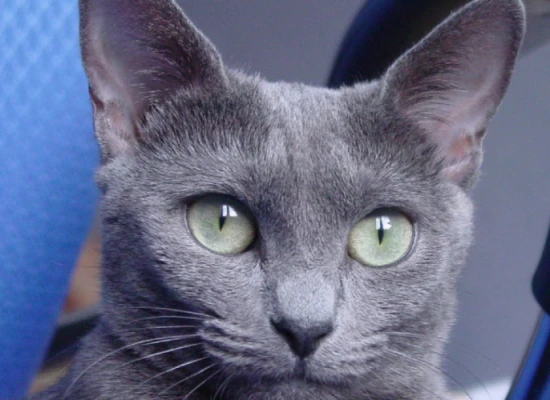
Things to note when breeding a blue cat:
1. Selection of mates: Purebred Russian Blue cats must be bred with other purebred Russian Blue cats to ensure the offspring have a pure bloodline. Mating Russian Blue cats with significant size differences is not recommended, as it can easily lead to dystocia (difficult birth).
2. Preparation before mating: Ensuring the male cat's nutrition is crucial for producing high-quality semen and ensuring healthy puppies. The female cat should have her nails trimmed to prevent her from scratching the male cat.
3. Environment: Choose a quiet place for your blue cat. If it is too noisy, the blue cat will experience mood swings and feel insecure when mating.
4. Diet: For two weeks prior to mating, provide a short-term booster diet, feeding both the male and female cats high-protein foods. This will improve the male cat's sperm quality and energy levels, while allowing the female cat to produce more eggs and energy, ensuring she doesn't lose weight during subsequent pregnancies.
5. Get the male and female cats closer: If the male and female cats have never met before, let them get to know each other before mating. You can raise each other in cages for 3 to 5 days.