We live within a vast food chain, where the birth or death of each organism affects others. Relationships between organisms are diverse, including predation, competition, and cooperation. While cats may appear domineering and authoritarian at home, they also have many natural enemies they fear in the wild. 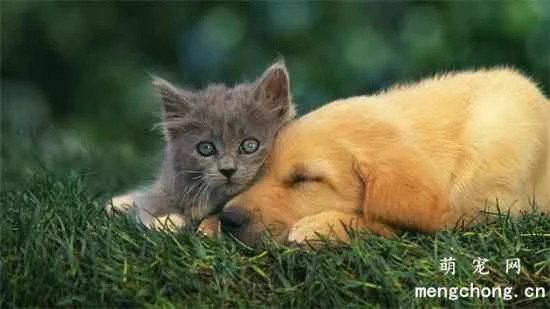
I. Python
Four police officers in Port St. Lucie have captured a 12-foot (approximately 3.65 cm) python, which they believe is responsible for a series of pet disappearances in the local community over the past nine months. Police recently released photos of the captured python.
According to reports, Denora, a resident who owns seven cats but has lost five, said, "That's the answer to many questions." Denora said that when her first cat went missing last November, she suspected a raccoon. "But then there were more disappearances over the next few months," she said, adding that she saw a large python coiled around a neighbor's cat last week. A police officer familiar with snakes believes the python was released by its owner when it was still a small cat. Port St. Lucie Police Department official Sabor said state wildlife officials are searching for the python's owner. Pythons are an invasive species in Florida, feeding on wildlife but having no natural predators. Most pythons live in the Florida Everglades, but some venture into densely populated areas.
A similar incident occurred in the tropical region of northern Australia, where an eight-week-old tabby kitten named Cole was playing in his family's garden when he was suddenly seized by a crawling python. When 14-year-old Tara McLaren ran into the garden to feed her beloved pet, she found the python lying on the ground, its belly bulging. Despite Cole's skull being three times the size of the five-foot-long python, the snake was still able to tightly coil around its prey and then open its jaws wide to swallow it whole. Three other kittens and five adult cats were unable to stop their rescue attack.
"It's very upsetting to think that this happened in our own backyard," said Asha McLaren, the cat's owner. "My daughter went out to feed the cats, and as usual, they all came running at the sound of the dish, but Cole was nowhere to be seen. So she started looking for Cole and found this python. Tara yelled at me to come out, saying there was a python and that Cole might have been swallowed by it. When I went into the backyard, I couldn't believe my eyes. The python's belly was swollen high, and since we couldn't find Cole anywhere, it was obvious that it had been swallowed by the python. We were very sad because he was our favorite little tabby cat, so adorable."
II. Most plants
Many plants are harmful to cats. Spring is a great season for growing plants, but if you have a cat, it's best to forget about it. With the exception of cat grass, most plants are harmful to cats. Oriental lilies, in particular, are especially dangerous. While their fragrance is pleasant to humans, curious cats might sniff them for a while and even take a few bites. This can lead to vomiting, kidney failure, and even death in cats, as they are highly poisonous. Besides lilies, azaleas, hydrangeas, and hyacinths are also toxic to cats. Common green plants like evergreen plants and ivy, and even aloe vera, which many women use as a face mask, are also considered toxic.
It's important to note that even if you believe a plant is harmless to cats and isn't on any list of toxic substances for cats, it can still damage their digestive system if accidentally ingested. This is because any plant a cat eats can irritate their stomach. Mild irritation, like vomiting hairballs (such as cat grass), is relatively minor. However, severe irritation can damage the digestive tract lining. Therefore, if you have a cat and want to grow plants, stick to cat grass.
III. Are dogs the natural enemies of cats?
Cats and dogs are both pets that humans like and love to keep. When cats and dogs live together, people naturally hope that the two adorable pets can live in harmony. However, the reality is often contrary to people's wishes. Cats and dogs often turn against each other and cause a great deal of trouble.
It's common to see cats and dogs fighting in the neighborhood. The moment a cat appears, the normally docile dog starts barking angrily, and the cat, not to be outdone, meows and its fur stands on end. Of course, some are timid and run away in fright. It's rare to see them being affectionate. So, are cats and dogs inherently incompatible?
The grudges among our ancestors were actually quite simple: shared tastes in food led them to hunt the same prey, thus forming this simplest form of competition. As the saying goes, it's better to resolve conflicts than to perpetuate them. Shouldn't future generations strive to reconcile? However, this process is fraught with difficulties.
First, cats and dogs don't understand each other's language, which is one reason why it's difficult to eliminate hostility. We all know that when a cat raises its tail, it's showing affection, while for a dog, wagging its tail is a sign of friendliness, and raising its tail indicates hostility. When a cat purrs, it means it's enjoying the moment and comfortably seeking attention, but if you notice your dog panting heavily, be careful—it means it's angry. Imagine a dog wagging its tail, wanting to play with a cat, while the cat thinks the dog is up to no good. The language barrier deepens the misunderstanding between them. Perhaps their offspring have tried, but it always ends in a fight and biting, further intensifying their animosity.
Secondly, the two animals have very different personalities. Dogs are naturally sociable and love to live in groups, while cats are loners. So sometimes, a dog might just want to express friendliness by running over to the cat and circling it a couple of times. But to the cat, this might be seen as a provocation, resulting in the dog scratching its nose and another inevitable biting match.
So, are there any examples of cats and dogs living together harmoniously? There should be. If cats and dogs have lived together since they were kittens, they have gotten used to each other and may have even developed a "common language". They can communicate without any obstacles and there will be no misunderstandings. This may be the only way to resolve past grievances and live happily together, laughing and playing.