Cats love to eat grass, as most people know. Cats eat cat grass not just for fun, but because it stimulates their digestive system, helping them expel hairballs from their stomachs; it also helps relieve stress; improves oral health, prevents and controls oral diseases; and supplements essential vitamins and trace elements to inhibit eosinophilic granulomas, oral ulcers, gingivitis, glossitis, and other conditions caused by various factors. Cat owners living in cities can easily grow cat grass for their feline companions. 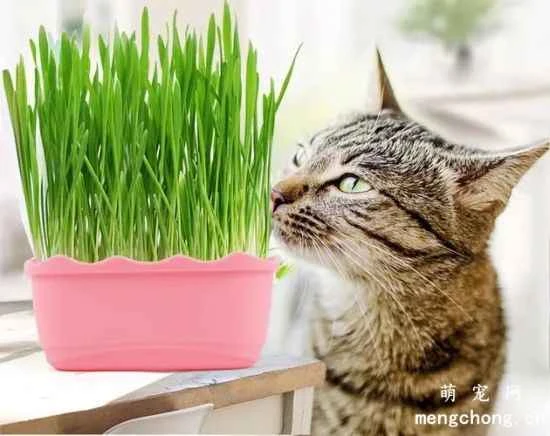
1) Seed selection: It must be oat or wheat seeds. Oat or wheat bought from supermarkets cannot germinate. Cats generally prefer to eat oat seeds.
(ii) Soaking: The seeds must be soaked, 12 hours in summer and 24 hours in winter. Place the seeds in a bottle with water about three times their volume. (Note: There are summer wheat and winter wheat varieties.)
(iii) Germination: This is very important. Pour out all the water from the bottle, turn it upside down so that the seeds are evenly distributed on the bottle wall (keeping the moisture inside the bottle). Temperature is crucial at this stage; the bottle should be placed in a relatively warm environment. Only plant the seeds when you see a small embryo emerge. If there is no small embryo, it means the seed is not a seed.
(iv) Sowing: The soil must be nutrient-rich soil bought from a flower and bird market; soil dug up from your neighborhood won't work. Scatter the seeds evenly on the soil and cover them with about 0.5 to 1 cm of soil. Too much or too little soil will affect germination. The flowerpot needs to be one with drainage holes at the bottom.
(v) Planting: Water thoroughly once in the morning and once in the evening. If it is cloudy, place it outside the window. If it is sunny, it can only be exposed to direct sunlight for a maximum of 3 hours, and should be moved indoors in time.
(vi) When the grass grows to 7-8 cm, it's ready for your cat to eat. At this stage, the grass is at its tenderest. After it's eaten, another crop will grow. After that, the grass turns yellow and becomes old, and the cat won't want to eat it anymore. So, make sure to give your cat the first, tenderest crop to enjoy promptly.
(7) Most cats will chew on the grass themselves. Some cats don't like it, so you can cut the grass into 4mm pieces and mix it into their canned food. They'll eat it all up. Never cut grass into dry food; the dry food will be damp, and cats won't eat it like that.
8) A few days after eating grass, the cat will vomit hairballs, which are yellow like poop, a large ball, and sometimes the hairballs are tightly wrapped. This means you have succeeded.
9) Cat grass needs to be watered every day, once in the morning and once in the evening, watering it thoroughly. Also, put some nutrient soil at the bottom of the pot, but don't let your cat play with or eat the soil, as it contains bacteria.
Following this method, cat grass should sprout in about 3 days after sowing, and be ready for your cat to eat in about 5 days. If it doesn't sprout, the problem is likely due to over-germination or too much soil covering.