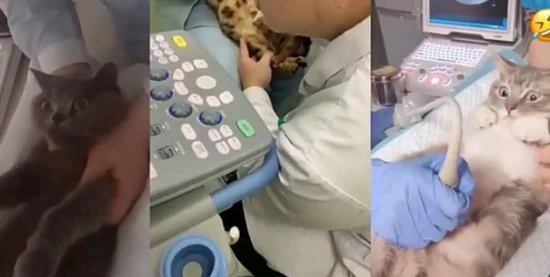
In the process of raising cats, we often encounter various illnesses. Before diagnosing these illnesses, we need to perform some general examinations on the cat, such as basic checks of the mouth, coat, and visible mucous membranes, or measurements of temperature, pulse, and respiration. These examinations help us to better understand our pet's condition and enable veterinarians to make better judgments during consultations. So how can we get our cats to cooperate with our examinations and prevent them from biting or scratching us? Some simple restraint methods can help you avoid these injuries. Below are some simple and basic restraint methods that are suitable for pet cats to perform at home. 
I. Cat restraint method
Cat restraint involves directly using your hands to hold the cat still. This method is generally suitable for cat owners, as the cat is familiar with its owner and less likely to react negatively. Owners are also usually very familiar with their cat's habits and are less likely to harm the cat. Cats are generally more timid and easily frightened than dogs around strangers or in unfamiliar environments. Therefore, when a stranger touches a cat, it is prone to anger. At this time, the cat's ears will usually stretch back, and it may hiss or begin to scratch or bite. Of course, this is also related to the cat's temperament. To be on the safe side, the person restraining the cat should wear thick leather gloves to protect their arms and hands. The general procedure for restraining a cat is to grasp the skin of the cat's neck, shoulders, and back, making sure not to grip too thickly to avoid violent struggle. Then lift the cat up and quickly grab its hind legs with your other hand to stabilize it. This achieves the purpose of restraint. However, some cats are quick and agile, and using gloves to restrain them may not be effective. In such cases, other methods may be used.
II. Lateral Recumbent Position Restraint Method
The side-lying restraint method is relatively simple. First, lay the cat down on a flat surface. Then, stand behind the cat, grasp its forearms and hind thighs with your hands, and use both arms to press down on its neck and rump, while keeping the cat close to your abdomen. For cats with a bad temper, you can hold the back of the cat's neck with one hand and its hind legs with the other, making it lie on its side on the surface.
III. Necklace Restraint
A collar, also known as an Elizabethan collar, is a commonly used restraint device to prevent self-injury. It's frequently seen in veterinary clinics and other similar places. Cats, like dogs, have a tendency to injure themselves, especially when experiencing neurological symptoms or having surgical wounds. Using a collar is the best way to prevent self-injury in cats. Collars come in two shapes: conical and disc-shaped. You can purchase different sizes according to your needs, or you can make your own. Making a collar yourself is more convenient; you can use X-ray film to create a conical collar. This restraint method prevents the cat from turning its head to lick or bite injured areas, promoting faster healing of scratches and bruises.
Restraint is a basic method we can use in our daily lives to examine cats. It is a good auxiliary means if you want to understand your cat's condition when it is sick. With mastering restraint, you can also make your own diagnosis based on some basic symptoms.