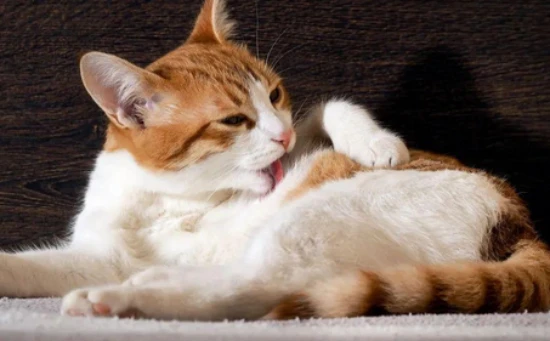
If your cat has ringworm, you'll need to shave its fur. If your cat is long-haired, you'll need to shave its fur after it gets ringworm. This makes it easier to treat the affected area and can prevent the ringworm from spreading too quickly. The amount of fur trimming depends on the severity of the condition. If the affected area is small and not very serious, you can simply trim the fur around it. If the affected area is large, you may need to trim all of its fur.

After trimming your cat's fur, you'll need to prepare some hydrogen peroxide to disinfect the affected area. First, stick several cotton swabs together, then soak them in a suitable amount of hydrogen peroxide and thoroughly wipe the affected area. After cleaning the area, promptly spray it with a cat-specific anti-ringworm spray.
Additionally, to prevent the cat from licking the spray, it's recommended that owners prepare an Elizabethan collar for it to wear. After treatment for ringworm, owners should ensure the cat receives adequate nutrition to help it recover quickly. Besides cat food, you can feed it canned cat food, goat milk powder, or freeze-dried food. If you have time, you can also cook some chicken breast or beef for your cat.