Tabby cats are independent, lively, and very sensitive to changes in their environment. They are extremely dependent on their owners, and a change of owner can cause them varying degrees of psychological harm. What are the behavioral habits of tabby cats? Below, we'll provide a detailed introduction: 
Self-cleaning
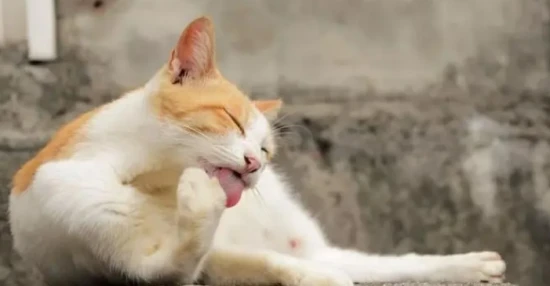
This tabby kitten frequently grooms itself by licking its body. After eating, it will wipe its whiskers with its front paws; after urinating, it will lick its anus; and after being held, it will lick its fur. This is how the tabby kitten removes odors and dirt from its body.
Tabby cats have many rough little bumps on their tongues, making them the perfect tool for removing dirt.
You can see that the tabby cat washes its face with its paws every day. Also, it always relieves itself in the same spot, and afterwards, it covers the feces with its paws.
For example, tabby cats lick their fur to: stimulate the secretion of sebaceous glands, making the fur shiny and smooth, less likely to get wet, and also to ingest a small amount of vitamin D, promoting normal bone development. It also makes the fur fluffy and promotes heat dissipation.
The tabby cat's behavior of burying its feces is purely instinctive, inherited from its ancestors. The tabby cat's ancestors—wild tabby cats—covered their feces to prevent predators from detecting and tracking them by the scent. This behavior in modern tabby cats has no such purpose, but it has earned them a reputation for being hygienic.
Lifestyle
Tabby cats still retain the nocturnal habits typical of carnivores, with many activities (such as hunting mice and courtship mating) taking place at night. They are most active at dawn or dusk, spending most of the day lazily resting or sleeping.
Tabby cats lick their fur for several reasons. Cleaning their mouths after eating is the most common action, but when a tabby cat is in a bad mood, it will lick its fur until it's soaked with its tongue if anyone holds or touches it before calming down. This indicates they dislike human odors. A tabby cat about to give birth will lick the fur off its belly with its rough tongue to expose its nipples so its babies can easily suckle. Tabby cats also lick their fur when they have ringworm or parasites to relieve itching.
When a tabby cat opens its large, round mouth, then squints its eyes, stretches its body forward and curls it forward, raises its fluffy tail upright, and rubs its body slightly to the side against its owner, sometimes even making a soft meow, this is a sign that the tabby cat wants to be petted and stroked. Pay attention to its behavior, and the owner can use this opportunity to build a friendly and trusting relationship. This behavior also indicates that the tabby cat is in good health and has normal eating and sleeping habits.
Tabby cats with their ears turned back, so that only their backs are visible from the front, indicate fear and self-defense. If the fear intensifies, their ears will droop downwards, their heads will retract, their backs will arch, their fur will stand on end, and they will stare at their enemies with a fierce, fang-baring gaze. This "claw-baring" behavior often occurs when two males meet at night and compete for the same mate. Their screams can wake people from a deep sleep.
Male tabby cats typically exhibit this behavior when they reach maturity. They will raise their tails and tremble a few times with their rear ends facing the target. This behavior is commonly referred to as "urination." The purpose is to establish their "territory" and deter other males from invading their territory by smelling the scent, thus avoiding unnecessary fighting. After urinating several times, male tabby cats will have a strong "masculine" scent, which helps attract female tabby cats in heat. 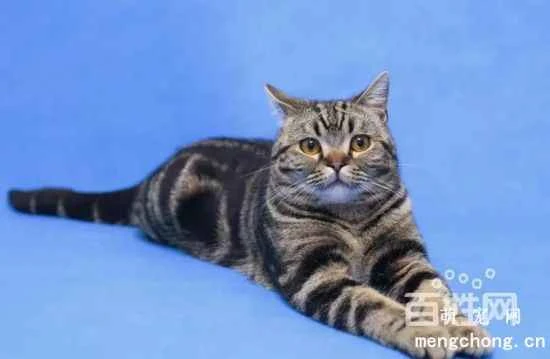
Behavioral Habits
Like dogs, tabby cats often wag their tails, but the meaning of a tabby cat's tail wagging differs from that of a dog. While a dog's wagging tail signifies friendliness and welcome, a tabby cat's tail wagging has a more complex meaning, which can be summarized as follows:
1. If two tabby cats are facing off and are intently watching each other's every move with their ears lowered, they will wag their tails vigorously from side to side, indicating that they are in a state of tension or excitement and may break into a fight at any time!
2. When a tabby cat is resting, if you insist on grooming its fur or restricting its freedom, it will wag its tail rapidly to show impatience. However, when it is peacefully napping somewhere, a tabby cat may not turn around to look at its owner when called; at most, it will wag its tail in response.
3. When a tabby cat willingly sleeps in its owner's lap, it is in the happiest mood. At this time, its tail will wag slowly and dramatically. Even in its sleep, the tabby cat will occasionally wag its tail. When a tabby cat wants something from you, such as food, it will rub against your legs, its tail held high with the tip gently swaying, meowing softly, instantly evoking feelings of affection.
4. Back arched, fur standing on end, claws out – I'm very fierce! Don't mess with me!
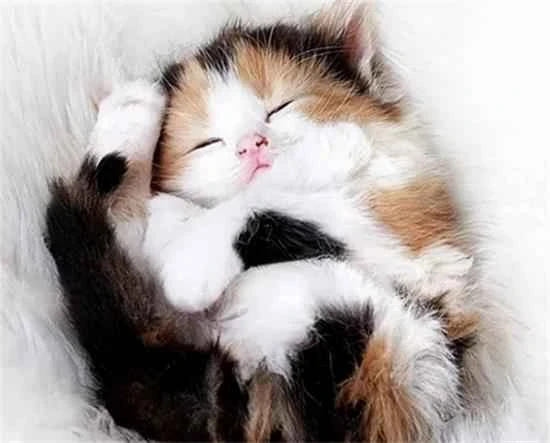
5. Lie down, belly up, legs flat in line with your body—I trust you, you're someone I can rely on, so I'm going to be a little clingy. Relax.
6. Curled up in bed—I'm resting, it feels so comfortable.
7. Tail held high, head held high, meowing at people—it's being affectionate. (Maybe it's also because it's hungry.)
8. Head down, buttocks high, crouching and staring at a single point—prepare to attack! Charge!
9. Sniffing someone's nose – I want to be friends with you; you seem like a nice person.
10. Stretching and yawning -- I'm not a threat to you... I just want to relax, or I just woke up.
11. Grooming – a general grooming activity, or a way to relax and relieve anxiety or tension.
12. Licking someone – You're my companion, I want to make you pretty too! Or wake up, I can't wait! Or wow, it smells so good! Is there something delicious?
13. *Snoring*...Master...you make me so happy and content. (Sometimes this can even lessen the burden of worries.)
14. The pupils suddenly dilate, as if paying attention to something -- Huh? Is there a handsome guy (beautiful girl) over there, or something delicious or fun?
15. Running around—I'm exercising and playing! I can't just sleep all day and turn into a fat tabby cat, can I?
16. Tail pointing straight up -- I'm a tabby cat who needs affection, comfort, or something. ...
17. Tail up, fur standing on end -- You want to mess with me?! I can be very fierce!
18. Its body was curled up, its tail resting comfortably against its body— *whoosh*... It was resting so easily.
19. Tail wagging gently – hesitation, a little nervousness, or being woken up by the owner in the middle of the night and not wanting to get up.
20. My tail is tightly curled around my body—I...I'm scared, but I'm going to scare you away!
21. Tail drooping – I'm just playing! Nothing exciting is happening...
22. Ears erect, not pointing in any particular direction -- an ordinary, relaxed, yet somewhat alert tabby cat.
23. Pull your ears flat and back—get lost! I'm angry.
24. The long, erect ears are pointing in a certain direction -- Huh? What's that sound? How strange!
25. Rubbing someone's hand with the back of your ear -- I like you so much.
26. Ears slightly tilted back -- (singing) I've been a bit annoyed lately, a bit annoyed...
27. Ears pointing forward – happy, joyful...confident, etc.
28. From a high place, with your head down and ears pointing downwards and forwards—is it safe to jump?