Head: The head is full and rounded, with a broad forehead. The face, from muscles to bones, should present a perfect roundness. The neck is short, but the hair on the neck is long. The skull should feel smooth and round to the touch, and there should be no excessive depressions or protrusions from the nasal cavity to the back of the head. There should be sufficient distance between the eyes.
Nose: Short, flat, and wide; the indentation of the nose is located between the eyes.
Cheeks: Full, not protruding around the nose and mouth, with soft and rounded cheek curves. 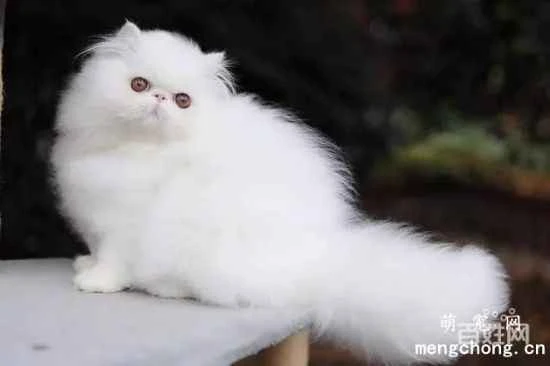
Mouth: Broad and strong
Lower jaw: broad and full, forming a complete circle with the entire face, with no occlusion defects.
Ears: Small and round, with the tips pointing forward, and the base of the ears should not be too large. They should be positioned on either side of the top of the head, with sufficient space between them. The ears should blend appropriately into the curves of the head; crooked ears or ears whose tips protrude beyond the contour lines of the top of the head will result in a deduction of points.
Eyes: Brightly colored, large, round, and full in shape, with sufficient distance between them, making the whole facial expression appear sweet and lovely.
Body: The Persian cat's body resembles a sturdy miniature horse, with short legs, a broad chest, and a thick, robust build from shoulders to tail. The cross-section of its body should be a complete circle, and the back should be level when viewed from the side. It is strong, muscular, and not obese. Size can be large or medium; it is important to emphasize that judging a Persian cat is based on its overall appearance, not solely on its size.
Limbs: Short, thick, strong and powerful. The forelegs are straight, and the hind legs should also be straight when viewed from directly behind the body.
Claws: Large, round and powerful, with toes close together; the front claws have 5 toes and the hind claws have 4 toes.
Tail: Short, but in proportion to the length of the body; the tail should not be folded or have other skeletal deformities.
Fur: Long and dense, with a smooth and soft texture, the thick fur outlines the Persian cat's full body curves. Even the shoulders and forelegs are covered by long fur, while the fur on the neck is even more prominent, like a thick scarf. The feathering on the ears and paws is also very long.
Disqualifications: White spots on the forehead; deformed tail; incorrect number of toes; significant physical defects; significant vertebral deformities; obvious skull deformities causing facial and head asymmetry; strabismus. For pointed cats, white toes or eyes that are not blue disqualify them from competition.