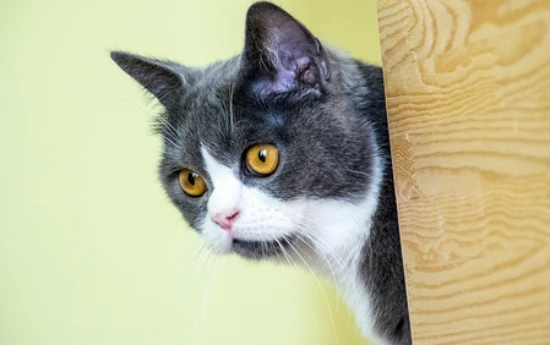
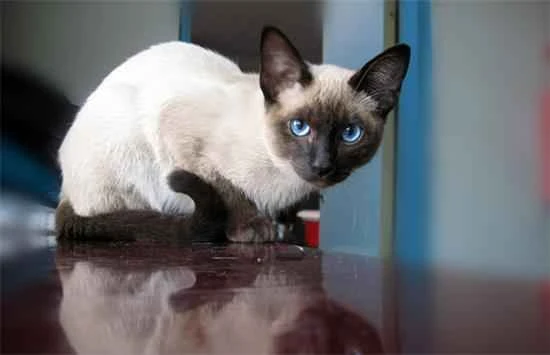
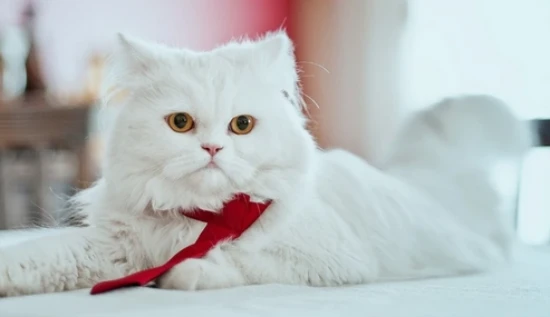
Cat coat color refers to the markings and colors on a domestic cat. It's not uncommon for kittens from the same litter to have different coat colors. Coat color is another important factor for cat owners (cat lovers) to consider besides breed selection, but it doesn't seem to receive much attention in China.
According to the standards of local cat breed registration associations, there are several, or even dozens, different standard coat colors for pedigree cats used for competition and breeding. Some breeds may only have a single standard. Strictly speaking, the color of the eyes, nose and paws must also be examined.
These colors are mainly derived from black and red, and there is usually no authoritative standard for naming them, so the same color may have different names in different places and associations.
Cat coloring list
panchromatic
Genetically speaking, cat fur contains only two types of pigments: eumelanin, which produces black (and its alleles chocolate and cinnamon), and chromaffin, which produces red. These pigments can vary in color depending on their density and distribution.
Solid color (or traditional color, single color) means that each hair on a cat's body has a complete pigment deposit, and the cat has only one color. Red cats, due to their genes, are prone to developing "ghost patterns" in kittenhood, which gradually disappear as they age. Cats with diluted fur color are generally called "Maltese cats," while cats with even more diluted fur color are generally called "caramel cats."
White
There are three reasons why a cat might have white fur:
The first type is a cat whose fur is affected by the white spot gene, resulting in random white patches on its body. When the white spots cover the entire body, it will become a completely white cat, but there may still be a few colored hairs mixed in.
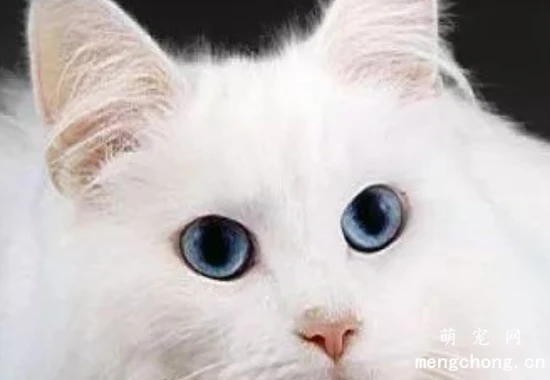
The second possibility is that the pigment in a cat's fur is suppressed by the white gene, which leads to a reduction in pigment cells and the appearance of white fur, resulting in pure white cats. This can also affect the spiral organ in a cat's ear, causing deaf cats with hearing impairment. Based on this, there are sayings such as "one in three white cats is deaf" and "white cats have a 1/3 chance of having hearing problems".
The third type is when cats are affected by recessive genes, resulting in an abnormal albinism. This can produce "pointed cats" with lighter colors or "albinos" with blue-purple (or pink) irises.
White cats don't have a fixed eye color; it's even quite common for them to have one blue eye and the other green, yellow, or brown eye, resulting in heterochromia.
Multi-color
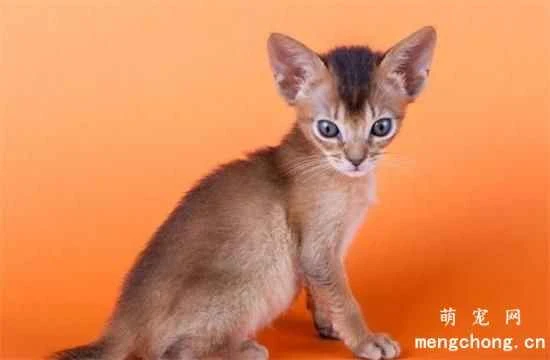
Also known as voles, voles grey, or wild-type grey, it is caused by the influence of the ringing gene. It can actually be considered a type of tabby pattern, but visually it is different from the tabby pattern in general. It will show alternating light and dark rings on the fur. Typical examples are Abyssinian cats, Somali cats, and Singapura cats.
tabby cat
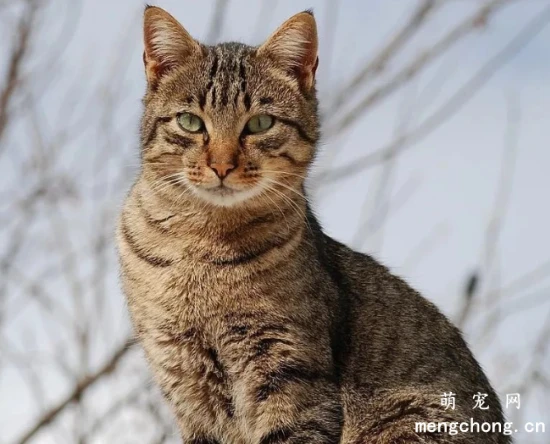
Tabby cats are cats with stripes, spots, or swirl patterns on their fur. Their common features include an "M" shaped marking on their forehead and eyeliner around their eyes. Tabby cats are sometimes mistaken for a separate breed, but this pattern can appear on many different breeds, and it can also vary in color, such as tortoiseshell, pointed, and tipped.
Common tiger stripe patterns include four basic types: "classic tiger stripe" (or "large spotted tiger stripe"), "mackerel tiger stripe", "spotted tiger stripe" and "multicolored tiger stripe" (or "Abyssinian tiger stripe"). Improved tiger stripe patterns include "braided pattern", "marble pattern" (or "cloud pattern"), "leopard cat pattern" and "rose pattern" resulting from the mating of wild cats and domestic cats.
Bicolor cat
Also known as a mixed-color cat, it is a cat with white spots on its body. Less than 40% of the white spots are considered low-grade white spots, more than 60% are considered high-grade white spots, 40-60% of the white spots are grade 5 bicolor, and grade 10 means that the cat's entire body is covered with white spots, making it a completely white cat.
Besides white spots, another color pattern can be solid, calico, tortoiseshell, or tabby, so bicolor cats don't necessarily have only two colors. When two colors mix to form interesting patterns, they can be described using specific terms such as "Van," "spotted," "magpie," "tuxedo," "white glove," and "hat and saddle." However, some abnormal white spots are not caused by the white spot gene, but by gene mutations, developmental abnormalities, disease progression, or aging.