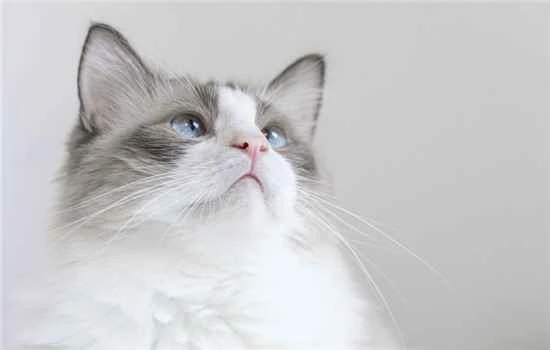
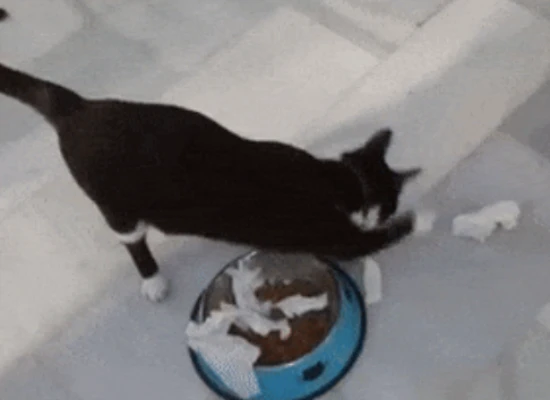
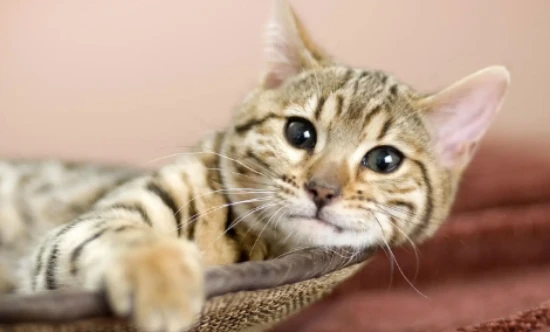
Cat owners often share this experience: bathing their feline overlord is like waging a difficult battle—the cat howls and screams, and the owner gets soaked, sometimes even scratched. But the moment you sneakily open the bag of dried fish, the cat starts fawning, trying to steal the treat…
Even when given dried fish during bath time, the kitten looks utterly dejected, which makes one wonder: if a cat is so afraid of water, how can it like to eat fish? How does it catch fish then? What a twisted soul!
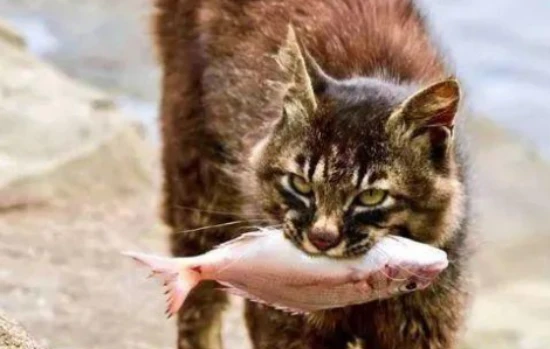
With the increasing number of cat owners, statistics from 2021 show that over 20 million people in my country own cats, including many of our editorial staff. Do you have a cat? You probably don't, but you're still enjoying reading about them! However, if we're talking about the originators of cat ownership, the Egyptians are undoubtedly the best. They not only mummified cats but also revered them as gods. And one version of why cats like to eat fish is related to the Egyptians.
As we all know, ancient Egyptian civilization was built on the Nile River, and agriculture was one of the main activities there. Over time, the Egyptians gradually noticed that rats were eating their staple food, and thus hated them intensely. However, they knew that wild cats near their homes were the natural enemies of these creatures. If humans and cats joined forces, wouldn't they be able to protect their food?
So, the clever Egyptians lured wildcats with fish caught from the Nile, gradually leading them into their homes, and over three thousand years ago, domesticated these allies into the masters we know today. Looking at wild cats, only fishing cats and flat-headed cats are known to fish, and there are occasional records of leopards and jaguars eating fish. However, modern science tells us that the ancestors of domestic cats were actually African wildcats, which were domesticated by people in the Middle East around ten thousand years ago.
African wildcats live in deserts and their main diet consists of rodents, including mice, and various birds; fish is not on their menu. So why have cats changed their habits and started to crave fish? There are two main reasons:
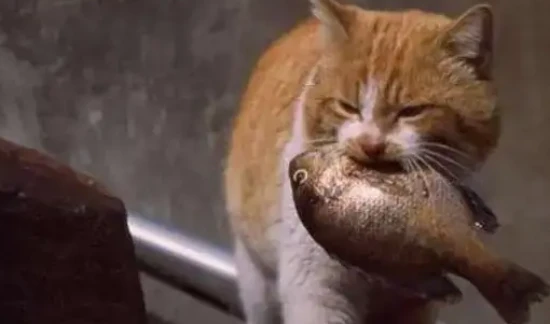
First, cats are opportunistic predators, willing to eat any meat they can get their hands on. They have 35 to 80 million olfactory receptors in their noses, while humans only have 5 million, making their sense of smell far more sensitive than ours. A strong fishy smell means fresh meat to them, and they have no choice but to eat it. Their ancestors, the African wildcat, didn't eat fish simply because they couldn't get their hands on any.
Secondly, although fish isn't part of a cat's regular diet, hunting still expends a lot of energy. Spending so much time with their owners means they'll often be offered treats, including fish, a high-protein, fatty acid, and amino acid source. Who could resist that? Wouldn't it be better to use the energy saved from eating fish to wreak havoc on the house? Therefore, it's not that cats love eating fish, but rather that eating fish offers them the two benefits mentioned above.