In multi-cat households, cat owners most hope to see their feline companions get along well. However, conflicts are sometimes inevitable. So, how can you tell if they're playing or fighting?
How can you tell if your cats are playing or fighting?
First, it's necessary to consider multiple factors to determine whether the cats are playing or fighting. When one or more of the following situations occur, the cat owner needs to intervene to break up the fight:
The attack was always launched by the same cat;
It was always the same cat that was pounced on and had its belly exposed;
Accompanied by screams or hissing sounds;
Both sides bared their fangs and claws;
Use your teeth to lock the throat, and kick with your hind legs;
Its fur stood on end, and hair flew everywhere;
After a brief separation, they will continue their struggle.

What do cats fight about?
Among indoor cats, the most common fights are probably:
Territorial conflicts: Common when a new cat comes into the home.
Displaced aggression: This refers to "being frightened and then randomly targeting someone to beat up," which is more common in multi-cat households.
Environmental changes (mainly changes in resources): lead to changes in the status of cats, triggering competition.
Distinguish between two types of attacks that can usually be left unchecked:
Maternal aggression: Uncommon. Aggression from a nursing mother cat against other cats, or even humans, that comes near. This aggression usually disappears after the kittens are weaned.
Playful aggression: More common among kittens. If it only occurs between kittens, no intervention is needed (although it's cute, if a kitten starts lightly nibbling on a human's fingers, it should be stopped).
How to stop cats from fighting?
What to do as a witness to a fight:
Use a piece of cardboard to separate the two cats' line of sight, so they can't see each other. Be gentle and don't anger the cats.
Don't try to break up a fight with your hands, you'll get scratched.
Do not unilaterally punish or suppress the "superior" cat; changes in status will only increase a new round of conflict.
Don't yell and scare the two cats away, as this will increase the stress on both of them.
Do not try to comfort a cat that has been "bullied" unilaterally, as this will not reduce the cat's stress. Wait until the cat has calmed down before doing anything else.
How to avoid conflict in the long term:
Spaying/neutering unneutered cats
Separate cat resources
Place the cat bowl, water bowl, litter box, cat bed, cat tree, etc. in two different rooms.
Space with elevation differences is available
Reward friendly behavior among cats
It is recommended to use more praise and petting in the early stages, because if food is not distributed properly, it may cause a fight.
Try pheromones
It can reduce tension to some extent; however, diffusers are needed when dealing with acts of aggression.

A cat's "utilitarianism"
Most cats do have a social hierarchy, but it is loose.
Cats only care about "whether I have it or not", and don't mind "whether I have it or not, you can't have it".
So as long as they are well-fed and watered, and have their own exclusive area (which can even be shared with other cats during designated time periods), they will not "cause trouble".
If your pet dog keeps getting smaller, what should you be aware of?
Even though the cats have found their place in the family and can generally get along peacefully, minor conflicts are inevitable from time to time.
This is something pet owners need to pay attention to:
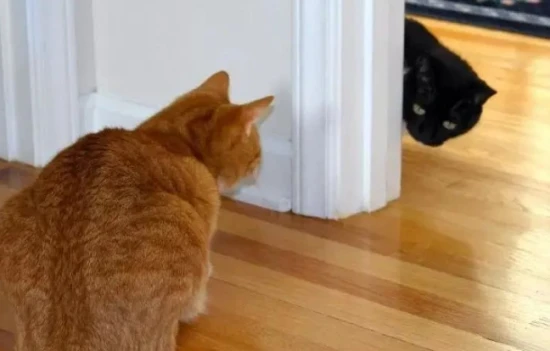
When a cat is injured, it will try to cover the wound or hide.
Therefore, if you notice your cat increasingly prefers to hide under the bed, sofa, or other dark and quiet places, you should monitor its appetite, water intake, and elimination more frequently to check if it is injured or sick.
Sometimes cats will frequently lick their wounds.
Check common wound sites
Because bites and digs are usually small but deep, pet owners sometimes don't notice them, or the surface of the wound may heal, but deep puncture wounds are prone to infection and ulceration, forming abscesses.
The top of the head, sides of the neck, paw pads, cheeks and sides of the brow bone, and hind legs are areas where cats are prone to injury when they fight.
In addition to observing for bleeding or wounds, you can also check for areas of pain by gently stroking and pressing the cat.