Sleep is important for us, and it's equally important for cats. Sufficient sleep allows us to relax, regulate our mental state, and provides us with plenty of energy. Cats, as we know them, seem to sleep all the time, so why do cats love to sleep? And how long can a cat sleep?
1. How long do cats need to sleep?
Cats are very sleepy animals. Adult cats spend 14 to 18 hours a day sleeping, using the rest of their time for eating, littering, playing, grooming, patrolling their territory, entertaining their owners, and meditating. Kittens need even more sleep, requiring 20 to 22 hours a day to ensure their healthy growth. Slow-wave sleep is primarily a cognitive sleep, characterized by slowed cerebral cortex activity and high-voltage, slow-wave brainwaves. During this time, the body is not completely relaxed; the common posture is prone, with the head raised and front paws naturally extended forward or tucked under the body. If you gently walk past a cat during this period, it will immediately wake up. 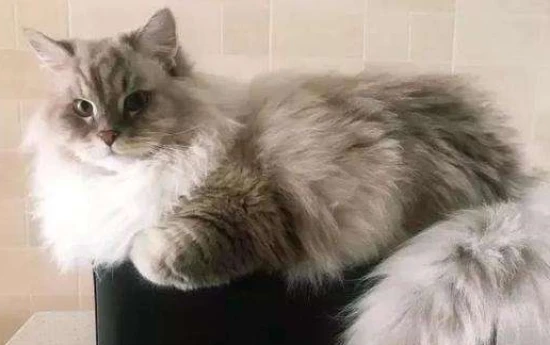
2. Why do cats sleep for so long?
Cat sleep is divided into two main categories: slow-wave sleep (also called quiet sleep) and active sleep (also called REM sleep). If you observe a sleeping cat, you'll notice that it will wake up at the slightest sound. This is because cat sleep is divided into light sleep and deep sleep. Most of the time, cats are in light sleep; they appear asleep, but they remain highly alert. During light sleep, cats don't get sufficient rest, similar to a human nap. Cats only enter deep sleep when they are truly relaxed. During deep sleep, cats usually adopt very comfortable postures, such as lying on their backs in a twisted position, while during light sleep, they often lie flat. A cat's sleep cycle alternates between light sleep and deep sleep, and light sleep lasts a long time, so the actual time they get to rest and relax is not particularly long; they only sleep for about 5 or 6 hours a day.
Of a cat's 16 hours of sleep per day, 4 to 7 hours are spent in eye movement (EMG) sleep. During EMG, the eyeballs rapidly jerk back and forth, and the nictitating membrane (inner eyelid) closes. EMG sleep is a period of rest for the body; when a cat enters EMG sleep, all its muscles relax, and its posture is usually curled up. Like humans, cats are very active during EMG sleep, and their brain waves are very similar to those when they are awake. Cats sleep very deeply during EMG sleep, and if suddenly awakened, they will temporarily lose their sense of direction and balance, similar to a human's reaction when woken up from a deep sleep.
These two types of sleep alternate constantly. When a cat first falls asleep, it is in a slow-wave sleep state. After 10-30 minutes, it enters a REM sleep state, and after another six or seven minutes, it returns to a slow-wave sleep state, sleeping for another 20-30 minutes. During this alternation, the cat often wakes up, stretches, yawns, changes position, and then goes back to sleep. 
III. Do cats dream?
Attentive cat owners will notice that sleeping cats sometimes smack their lips, twitch their limbs, and some even meow softly. Don't be surprised, at that moment, your cat is dreaming! Just like humans, cats dream, but their dreams are usually simpler, often involving eating and playing. When your cat smacks its little mouth, it might be dreaming about the delicious meal it had that day!
IV. Where is the most comfortable place to sleep?
For cats, such pampered animals, sleeping in a soft, warm, familiar place with their owner's scent is the safest, most secure, happiest, and most comfortable experience. That's why many cats like to sleep in their owner's bed and on their clothes. My cat, when we're busy, always feels safe sleeping next to our old clothes.
5. Why don't cats sleep in the early morning?
One of the biggest headaches for many cat owners is being woken up by their cats in the dead of night, when they should be sleeping soundly. They wonder why cats, who are usually very sleepy, are so energetic at this crucial time. The reason is quite simple: for cats, natural hunters, nighttime is when prey comes out to hunt. In the darkest hours of the morning, only their bright eyes can see everything. Cats can clearly see the prey's every move, while the prey cannot see the cats, making this the easiest time to hunt. Even as domestic cats, they still have the blood of hunters flowing in their veins; their primal instincts make them most alert in the early morning.
From the above, we can understand that cats need a good sleeping space. Sufficient sleep can keep cats healthy and happy. We should do our best to create a good environment for cats so that they can grow up healthily.