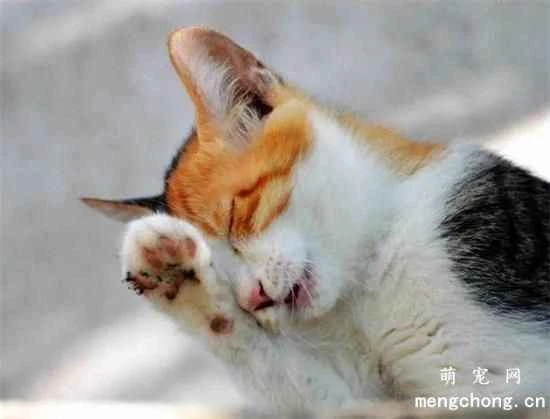
In the early stages of the disease, cats will become less active, and later they will have difficulty moving. Obvious symptoms include: lameness in the hind legs, frequently lifting their paws, arching their backs, and walking as if on stilts.
In addition, the cat's tail appears short and thick, and its joints are stiff and unable to move. The bones and joints of its hind limbs are abnormally developed, with deformed and curved foot bones that are shorter than those of a normal cat. The bones and joints of its paws are swollen, and in some cats, the toes are even deformed, and the claws cannot retract normally. 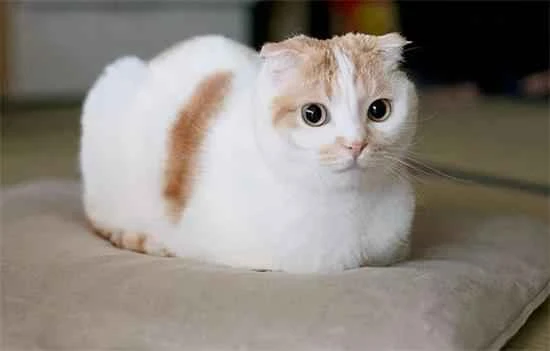
Similar symptoms may also appear on the forelimbs, but to a lesser degree than on the hindlimbs.
Scottish Fold cats have a genetic defect, and those with the folded ear gene are at risk of developing certain degrees of skeletal and joint diseases.
Since the skeletal genetic disease of folded ears is caused by a mutation of the dominant gene, all folded-ear cats have abnormal cartilage ossification, which manifests to varying degrees in areas such as the tail, ankles, and knees.
Give your cat chondroitin sulfate as soon as possible. Long-term use will control the condition and prevent it from worsening. Otherwise, your cat will suffer a lot in the end.
Scottish Fold cats can only take chondroitin to relieve pain during an attack of the disease.