Most families feed their cats commercial cat food, while some owners choose to make their own, which can help adjust their cat's diet and give them a change of pace. However, many pet owners are now feeding their kittens homemade cat food, which is definitely not the right approach. Why? Let me explain in detail below. 
1. Why kittens shouldn't eat homemade food
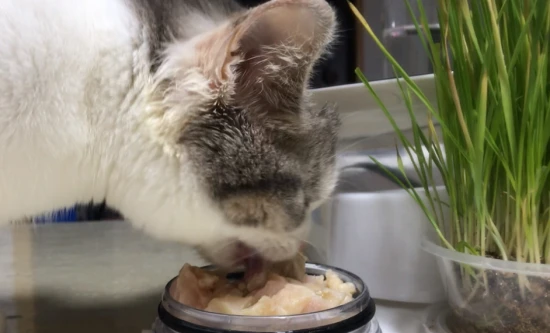
Kittens are best not fed homemade food. Cats generally reach sexual maturity about two months earlier than physical maturity. Kittens are defined as those under 8-12 months old. They require a lot of nutrition, and nutritional deficiencies can seriously affect their health. Cat food is composed of various ingredients and supplemented with nutrients according to a cat's needs. Senior cats should eat nutritionally rich senior cat food. When a cat is sick, it may need to eat prescription cat food. For young and middle-aged cats, homemade food may not cause serious health problems due to nutritional imbalances. Cats fed soft food are prone to tartar buildup.
Canned food is less nutritious than dry cat food, so it's okay if your cat refuses to eat it. Conversely, it's not good if your cat only eats canned food and refuses dry cat food. Some cats don't chew their dry cat food, which is fine too; dry cat food is already extruded and softens quickly after eating.
Cats that love chicken liver can eat a lot of it at once without any problems, but they might start wanting liver every day and refusing to eat cat food. Long-term consumption of chicken liver is particularly bad because vitamins A and D compete in the body; too much vitamin A reduces vitamin D absorption, leading to calcium deficiency. Furthermore, the liver is a detoxification organ, and not all toxic substances, such as heavy metals, are deactivated during processing.
II. Feeding kittens
Kittens aged 2 to 5 months are in their growth period. During this rapid growth phase, kittens require a significant amount of calories. A kitten weighing 1 kilogram at 3-4 months needs 130-250 calories per day; after six months, this drops to 100 calories, and adult cats need 80 calories. Nutritionally, cats are primarily carnivores, so they require a high amount of animal protein. In addition, insufficient calcium intake can lead to incomplete bone, teeth, and claw development; taurine deficiency can cause blindness or cardiovascular disease; and vitamin A deficiency can cause visual impairment or deteriorating skin conditions. These nutrients should be supplemented. Kittens require 40% more calcium during their developmental stage than adult cats.
Because kittens require a variety of nutrients for development, feeding them only cat meat will lead to malnutrition. However, giving them excessive vitamins can cause poisoning. In the past, many cat owners fed them leftovers, but at that time, cats could forage for food outside to supplement their nutritional deficiencies. Now, cats are mostly kept indoors, so owners need to be especially careful about their nutrition. Without proper nutritional knowledge, it's best not to prepare food for your cat. Feeding cats commercially produced cat food is a better approach for their growth and health. It is recommended that cat owners choose different foods for their cats according to their life cycle (juvenile stage, adulthood, gestation period, etc.).
Finally, it's worth noting that while kittens eat a lot during their developmental stages, they generally learn to control their food intake. For kittens, it's fine to feed them several meals a day as long as they're willing to eat; there's no need to restrict their feeding frequency. Of course, smaller, more frequent meals are best.
Kittens have very weak digestive systems and immune systems when they are young. Some of the ingredients in homemade cat food are not digestible for kittens. Therefore, kittens may not only fail to get nutrition from homemade cat food, but may also get sick. It is better for pet owners to mainly feed them cat food and kitten formula.