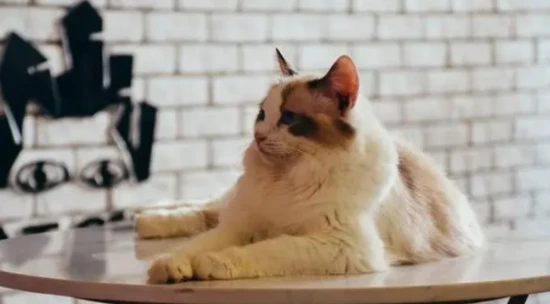
A cat's skin color is determined by its genes, which is why we see so many colorful cats. However, not every cat's genes are perfect, and some cats have a monochromatic color, such as black cats. Black cats are generally regarded as symbols of the supernatural and bad luck, and superstitions and some human aesthetic prejudices have hindered the keeping of black cats. 
Studies show that 13% of American adults are superstitious about black cats and would definitely not adopt one. However, the problem is far more serious than mere superstition. A similar trend exists in dog adoption—black dog syndrome. Rescue organizations and shelters have found that black animals are adopted far less frequently than animals of other colors. Reasons for this adoption bias include: dim lighting in shelters (black cats are harder to spot in the shadows), "prevalence," and superstition.
Cindy Szczudlo, rescue services manager at the North Shore Animal Alliance, stated directly that superstition and stigma affect the adoption rate of black cats. "We recently held an adoption event, and all the cats that weren't adopted were black. Only one black cat found a new home; the vast majority of adopted cats are light-colored, yellow, or spotted." She counted the eight cats currently at the shelter, four of which are black, a clear imbalance. She said black cats are actually very beautiful, but they always blend into the background. This lack of attention leads to fewer adoptions, and the influence of superstition cannot be ruled out.
Russians believe that if a black cat crosses your path, you will encounter bad luck. Therefore, when encountering a black cat on the street, Russians will stop and wait for it to pass, or even take a detour. Black cats are unpopular, but cats of other colors are well-received. When Russians move to a new house, they always make sure the cat is the first to cross the threshold. If they don't have a cat, they can borrow one from a neighbor. This is because if there are mice in the new house, the cat will catch them first, preventing them from catching noises at night.
But Dr. Emily Weiss, Vice President of Research and Development at the American Society for the Prevention of Cruelty to Animals (ASPCA), said her research showed no difference in the focus on black cats. She suggested the lower adoption rate for black cats might be due to a lack of consideration for numbers. "If there are five black cats, one yellow cat, and one white cat, and each one is adopted, the adoption rate is the same because there are more black cats." The higher number of black cats in adoption centers is common because black fur is a dominant gene. Of all fur colors—black, brown, white, yellow, tan, calico, and various mixed colors—black cats make up 33%. "Every time you go to an adoption center, you think, 'Wow, so many black cats aren't being adopted.' And it really is, because there are just too many of them."
While the research acknowledges the importance of numbers, she also points out that data doesn't reflect daily reality. "Working on the North Shore and at shelters, I definitely felt the black cats were being neglected," says Natalie DiGiacomo, director of shelter services at the American Society for the Prevention of Cruelty to Animals (ASPCA). She notes that ASPCA data is very useful for assessing adoption rates. This perceived crisis isn't really a crisis, but rather a reflection of varying adoption rates across different shelters.
“We should dispel long-standing misconceptions and accept the different reality revealed by research. We also need to see the reality of our communities and respond accordingly.” This means breaking down prejudices; stereotypes don't help anyone. “I don't want people to lose true companions because of rumors that started 20 years ago.” Regardless of whether superstitions hinder adoption, homeless cats truly need our help. The reality is that many cats end up in shelters. The solution is simple: adoption. Adopt homeless black cats.
To address this issue, the UK has established Black Cat Day (October 30th), on which a national black cat photography contest is held by British feline charities. National Black Cat Day was established to raise awareness of black cats, and organizers hope to dispel public prejudice against them. Finding new homes for black animals has become a national issue in the UK. National Black Cat Day aims to raise awareness of black cats and help people realize that these cats are just as lovely and gentle as other cats. Currently, the number of unclaimed black cats in charities is increasing, now accounting for about half.
We can gradually discover the beauty in black cats. For example, black represents nobility and calmness. Nowadays, cats with single-colored fur are becoming increasingly rare, and black cats also need protection. In addition, black cats don't get dirty easily, and taking pictures of them doesn't require Photoshop as they are naturally black and white. So, if we change our perspective, we will find that black cats are actually quite cute.