Yoga is no longer just for humans; cats can also practice yoga, and their postures are quite perfect. They can serve as our teachers and practice partners, which is a real treat for many women. Imagine practicing yoga in the studio with an adorable cat beside you; watching it would greatly enhance your motivation and improve the results! 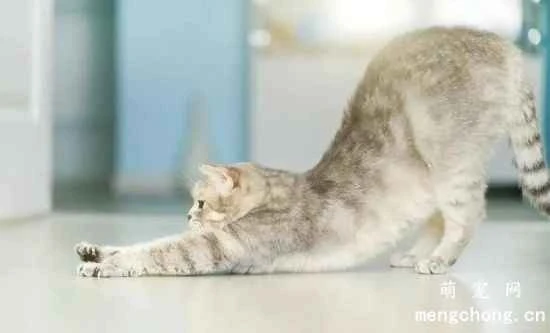
We often complain that cats love to lie around and don't want to move, but with proper training, you'll find that cats are incredibly active, exceeding your expectations. Their enviable flexibility also allows them to easily master challenging exercises like yoga. Fitness undoubtedly brings health benefits to cats, strengthening their constitution and boosting their immunity. Plus, having a cat that can do yoga is quite a status symbol.
Amy Apgar, a Prana Yoga teacher in New York, was sitting behind ten people at the MeowParlour cat-themed café, all there to learn cat-themed yoga. While the place is usually used for coffee, interacting with cats, and eating cat-face macarons, it closes for an hour and a half every Tuesday for cat-themed workouts.
Apgar had two cats beside her; one was sleeping on a card box above her head, and the other sat in a storage box next to her, watching her. All the students were women, because few men would pay for intimate activities with cats. As a proud cat lover, I pretended not to smell the faint odor of a giant trash can in the room. You might think, "Why spend money when you can learn yoga with cats at home with your own cat by watching free yoga videos on YouTube?" I came here not because regular yoga classes are full, but because the experience is special and something to share with friends. People might ask, "Do the cats do yoga with you?" Each 1.5-hour class includes 30 minutes to bond with the cats, 45 minutes of yoga, and 15 minutes to say goodbye to the new cat lover. However, cat lovers know they sleep 12-16 hours a day, so you might encounter the cats napping when you come to Meow Parlour. However, we can approach them when they are tucking their paws in and getting ready to sleep, and whisper in their ears, "You're so cute! I want to take you home. Oh my god, look at your paws, they're so adorable." These kinds of words can help to distract them from their sleepiness.
Not only in cat cafes, but also in some animal shelters, it seems that yoga for cats is more convenient to set up. Yoga at Connie's, a yoga studio in Illinois, USA, partnered with the local zero-culling animal shelter Homeward Bound to offer a special yoga class that allowed several adult cats awaiting adoption to move freely in the class. 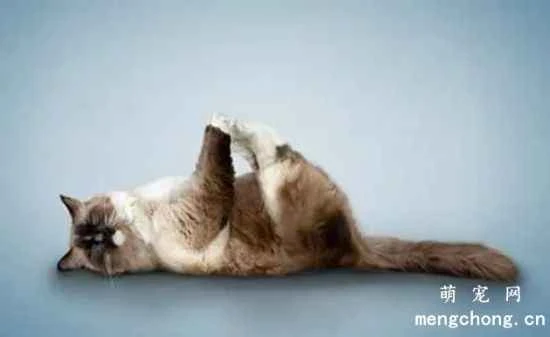
The very existence of cats is therapeutic. According to Scientific American, a cat's purring can stimulate bone and muscle growth and heal injuries; people who have cats as companions also have a 40% lower chance of developing heart disease than the average person.
Jeanette Skaluba, a shelter volunteer who initiated the event, said that many people think of animal shelters as depressing places, so few people visit them. By bringing the cats to the yoga studio, people can have the opportunity to interact with them outside the shelter, allowing the cats to show their faces and personalities, and people can also imagine what the cats might look like at home.
On the other hand, photos of yoga cats are also very appealing. In late 2009, American photographer Dan Boris and his wife had a sudden inspiration and took a series of photos of "yoga cats," which they then turned into a calendar. This yoga cat calendar became a hit in Europe and America.
Boris's wife, a former yoga instructor, had her students this time: lively cats. During the shoot, she coaxed the animals into yoga-like poses and postures. Boris took the actual images and then spent hours processing them using computer software to finalize the final product. Boris said that photographing the cats gave him an unprecedented respect for their agility.
Of course, some might say, "My cat doesn't like to move, how can I train it to exercise?" We can use a playful approach. Defining the scope of play is difficult; essentially, play is just a form of entertainment. Cats often incorporate everyday activities into play, such as hunting, fighting, escaping, and even cruel hunting behaviors, all of which contain elements of play. Kittens often role-play as hunter and prey to learn hunting skills. Training shouldn't be rushed; start with the simplest things, like walks. Then gradually transition to more difficult, skill-based movements. Guiding your cat to exercise requires consistency; don't stop after three days. Once training begins, start with the most basic and simple exercises. As your cat gains experience and its bones become stronger and more stable, you can then teach it yoga poses, which it will learn quickly.