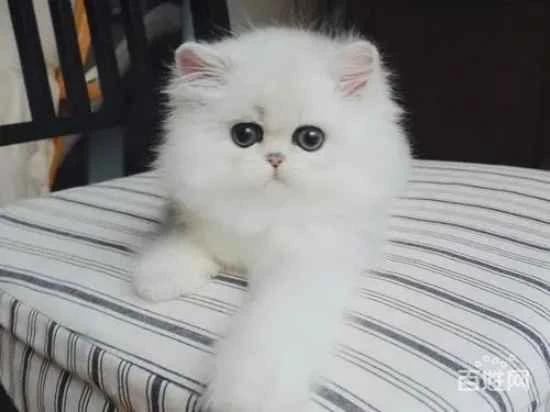
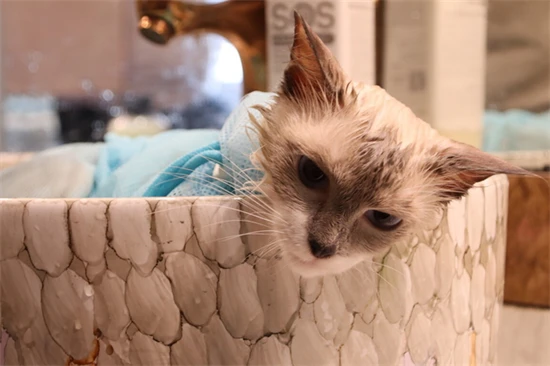
Among the many cat breeds, Siamese cats have a unique appearance and are extremely loyal, earning them the nickname "dogs among cats," which makes them very popular. However, in some photos of Siamese cats, I've noticed that their eyes are somewhat crossed. Many Siamese cat owners abroad have become celebrity cats because of their cats' adorable crossed eyes. In fact, crossed eyes in Siamese cats are caused by a variety of factors. 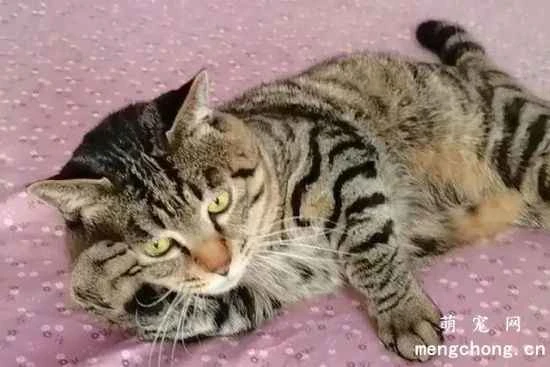
Some Siamese cats develop crossed eyes because the left side of the brain primarily controls the right eye, while the right side primarily controls the left eye. This can lead to double vision, and the cat tries to correct its vision by crossing its eyes. This results in strabismus, or cross-eyedness in Siamese cats.
Strabismus, or strabismus, refers to the inability of both eyes to simultaneously focus on a target. This requires the coordination of perception, movement, and central nervous system functions to analyze and fuse the visual impulses of both eyes into a single, complete image with a sense of subjectivity—the normal visual process of binocular single vision. Dr. Foster, a veterinarian from Michigan State University (and winner of the American Award for Feline Medicine and Surgery), points out that strabismus is a term used to describe abnormal eye positioning or orientation. Normally, a cat's eyeballs are fixed in their proper positions within the eye sockets, with small muscles attached to them driving the eyeballs to move left and right or up and down. Occasionally, slight differences in the length of the muscles on both sides can cause the eyeballs to turn in an abnormal direction, affecting the position of one or both eyes. Therefore, strabismus in cats is inextricably linked to their daily movements, sensory coordination, bodily reactions, and even the laxity of the skin around the eyes and the resilience of the intraocular muscles.
It's fair to say that simply observing the position of the black part of a cat's eye within its eye socket—that is, how close it is to the bridge of the nose—is insufficient to definitively diagnose strabismus (crossed eyes). Discussions on this issue are still ongoing both domestically and internationally. Although the structure of a cat's eye differs from that of a human eye, numerous clinical ophthalmological studies use cats as experimental animals to study human visual function. Therefore, observing a cat's eyes can, to some extent, draw upon human strabismus examination methods as a reference for making a more rigorous assessment of strabismus in cats.
Another distinctive feature of Siamese cats is that they only have black fur on their face, ears, and the tips of their paws, while the rest of their fur is light cream-colored; this is due to their unique Siamese gene. The Siamese gene inhibits melanin production, but the lower the temperature, the less effective the Siamese gene becomes. Therefore, Siamese cats only have black fur on their face, ears, and paws when their body temperature is lower, which is generally referred to as pointed coloring.
In animals lacking melanin, the optic nerves sometimes intersect in ways that shouldn't occur in the optic chiasm, causing abnormalities. Because the conduction pathways of the optic nerve are determined during retinal cell development, abnormalities in these pathways are generally considered to be related to melanin.
In fact, it's not just Siamese cats; cats with light-colored genes or Siamese point genes are also more prone to strabismus (crossed eyes) than other cats. Besides strabismus, they are also more likely to experience nystagmus (eye tremors).
Cats with crossed eyes have a narrower field of vision and less depth perception; however, if kept indoors, it doesn't affect their daily lives at all! Therefore, there's no need to be particularly averse to keeping cross-eyed cats! It's worth noting that cross-eyed eyes can also be caused by neurological disorders. If an adult cat suddenly develops cross-eyed symptoms, don't take it lightly; take it to the vet immediately.