Owning a cat has many benefits. It's a companion in our leisure time, and even a mentor, helping to cultivate our character and refine our temperament. It can also reduce stress and improve our health. Of course, all these benefits depend on having a cat. There are many breeds of cats, purebreds and mixed breeds, each with its own personality. They can also be obtained through various channels, such as pet stores or catteries. So, how do we combine so many factors to choose the right cat for us? 
I. Differences between purebred cats and mixed-breed cats:
In the classification of pet cats, there are purebred cats and mixed-breed cats. These two types of cats have obvious differences in pedigree and breeding. Purebred cats are those whose ancestors are all from the same breed, usually through inbreeding. This inbreeding often results in congenital defects in the cats. Mixed-breed cats, on the other hand, are offspring of crossbreeding. Their bloodline is not pure, but they are highly adaptable and therefore popular with the public.
Purebred cats are generally the result of selective breeding. Long ago, people kept cats as pets and then selectively bred them. This process of breeding purebreds involved crossbreeding and selection. Therefore, the cats we hold in our arms today are, in a narrow sense, not "purebred" but "mixed breeds." Later, some cats with similar appearances and temperaments emerged. These cats gradually became standardized, and through careful selective breeding, their genetic traits were stabilized. These are the purebred cats we know today. However, some are crossbred, and some are naturally bred. Ultimately, all breeds are created by narrowing the variation in breeding characteristics and strictly controlling the process. They are ultimately bred from cats with the same appearance and traits.
Mixed-breed cats are generally not easily recognized by people or relevant organizations in terms of breed, and their appearance can be very diverse. Because breeding is unrestricted, coat patterns vary greatly, making meaningful classification impossible based on facial features. Of course, in certain regions, inbreeding between related but non-purebred cats has occurred, resulting in many similarities between them.
II. What makes a cat healthy?
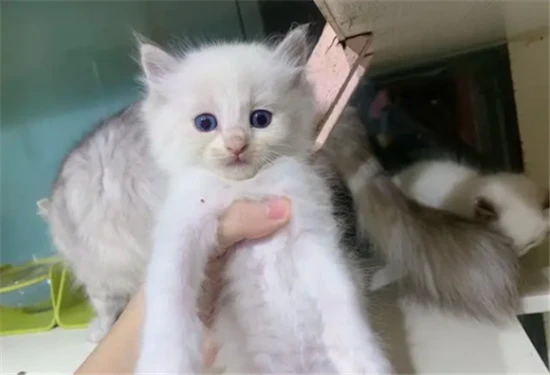
A healthy cat should have clean ears without any discharge; its nose should feel cool and moist to the touch, with no nasal discharge or snot around the nostrils; its eyes should be clear and bright, with no discharge at the corners of its eyes, and the third eyelid should not be visible; its abdomen should be round, and you should not be able to feel the ribs; its anus should be clean, without any signs of diarrhea, and the surrounding fur should be clean and free of stains; its fur should be glossy, fluffy, and upright.
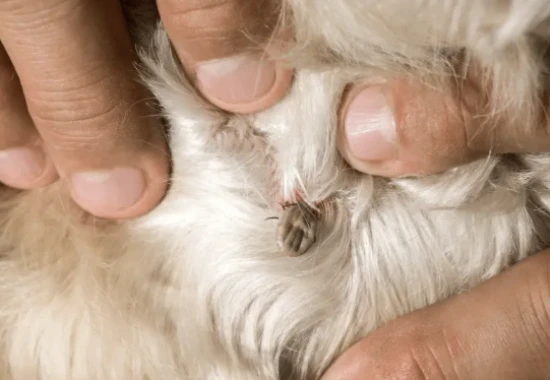
When choosing a kitten, owners can touch its body to check for healthy bone development and parasite infestations. Additionally, they can use treats or toys to entice the kitten and observe its reactions to its surroundings and its attitude towards people. If the kitten actively fights for food and toys, isn't afraid of people approaching, and even actively tries to be friendly, then it's a kitten worth considering.
III. Should I choose a male or female cat?
You can choose either a neutered male cat or a neutered female cat. Both types can make equally good and affectionate pets. I advise against keeping a neutered male cat because it will urinate everywhere, emitting a pungent odor; it often roams outside, frequently fighting, which can lead to injuries or infections. For the same reason, you shouldn't keep a neutered female cat either. Such cats often go into heat at certain times of the year. If you don't keep it indoors, it may not get pregnant at your request. Neutered cats don't have these drawbacks and may even be more affectionate towards people.
IV. Kitten or adult cat?
While small, delicate kittens are undeniably adorable when choosing a pet, they require a lot of care and must be trained to maintain good hygiene. On the bright side, kittens usually adapt to new environments quickly. For many, raising an adult cat is a wise choice. This is especially true if you work outside all day, find kittens too noisy, or are difficult to train. If you have already purchased an adult cat, keep it indoors for the first few days; otherwise, it may try to return to its original owner.
5. Should I get one cat, or two cats?
If you have limited income or a small living space, it may not be possible to buy several cats. However, if every member of your household is out during the day, leaving only one cat at home, it might get lonely. In that case, you can choose to buy two cats so they can keep each other company. There are many sources of cats. Seeking recommendations from others is a good approach; never rush into bringing a cat home before investigating its origins.