Newborn kittens are also called kittens. At this time, the kittens' teeth have not grown in yet, and their mouths are smooth. Feeding them dry food is definitely not suitable. The best way to feed kittens is to drink their mother's milk. However, if the kitten has been separated from its mother, then it can only be artificially fed. 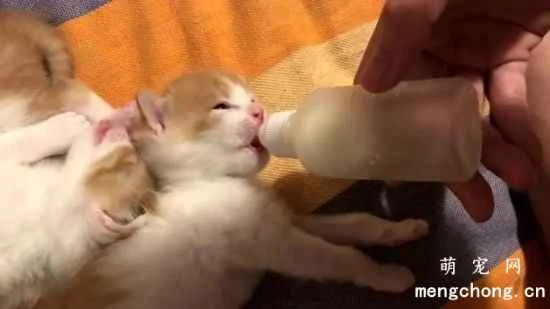
Since kittens at this age don't have teeth yet, it's best to feed them liquid food, such as kitten milk powder. There are special formulas for kittens without teeth. Cats' digestive systems are different from humans', so human milk isn't suitable for cats. Kitten milk can be purchased from professional veterinary clinics, online pet stores, or pet shops. If the kitten isn't drinking from its bowl, you'll need a large syringe to draw milk. Hold the kitten upright, supporting its chin with your left hand so its head is slightly tilted upwards. Alternatively, you can let it lie on its back on your lap and support its head with your left hand. Squeeze out a little milk and rub it around the kitten's mouth. If the kitten readily latches on and sucks, that's best. If the kitten doesn't eat on its own, gently insert the nipple from the side of its mouth and slowly feed it. It will usually swallow, and about 2 ml of milk per feeding is sufficient. After feeding, wipe the kitten's mouth and chin clean with a soft tissue. The temperature of the cat milk should never be too high, because cats' tongues are very sensitive to heat.
It is especially important to note that the milk fed to kittens must not be pure cow's milk, because kittens lack the enzyme to digest lactose and have lactose intolerance. They cannot digest cow's milk and will experience diarrhea and indigestion, which can be fatal to kittens.
Another way to feed kittens is by borrowing their teats. See if any cats have recently given birth and have extra teats or milk. You can temporarily foster them until they are weaned, then take them back. Cat milk contains antibodies and various immune cells that can kill or inhibit viruses. Abandoned kittens that haven't received colostrum generally have very weak immune systems and are more likely to die from latent viral infections during artificial feeding. Even if they grow up successfully artificially, their health will be worse than kittens that have received colostrum, making them more susceptible to illness. Also, caring for too many kittens can be exhausting for one person. Finding a foster mother is a better option, but it's risky. If the foster mother abandons the kittens, they may starve. Therefore, even if you find a foster mother, daily human monitoring is necessary. You can try searching for foster mothers online; posting on pet forums will often attract kind people who will help you.
In addition, owners can adjust the diet according to the kitten's growth and access to cat food to ensure its healthy growth. It's also helpful to introduce different foods from a young age to prevent it from becoming a picky eater later in life. If you decide to feed it regularly, it's best to feed it 4-6 times a day before 12 weeks of age, 3 times a day before 6 months of age, and after 6 months, when it has enough teeth to eat any kind of food, 2 meals a day is sufficient.
As your cat grows, its body develops and matures, its digestive system functions normally, and all its teeth grow in. At this point, you can gradually start feeding it dry cat food. Furthermore, once your cat reaches adulthood, you can choose to feed it professional adult cat food.