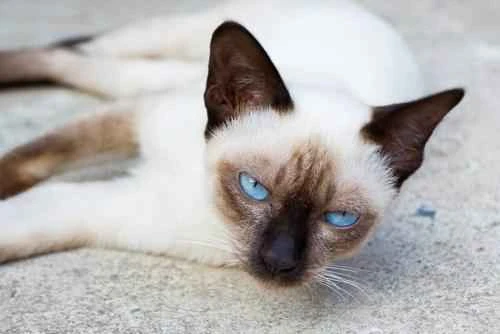
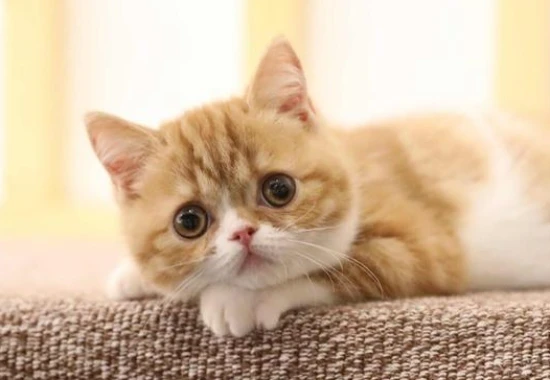
Burmese cats have sweet meows, unlike the noisy meows of Siamese cats. They are lively and playful, always seeming to have endless fun. Many Burmese cats can use their soft, gentle voices to make requests of their owners, and are rarely refused.
Burmese cats are very friendly towards people and get along well with household dogs. If they have a pleasant travel experience as kittens, most Burmese cats can get used to car rides. Burmese cats are very dependent on people, and their personalities are somewhat dog-like: many Burmese cats can learn to fetch things like dogs. They also enjoy doing chores, such as helping with paperwork or reading aloud (usually sitting on a book or manuscript), or crawling into cardboard boxes (demonstrating how to organize things). 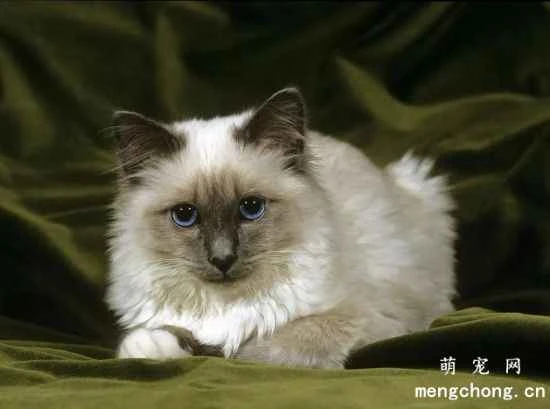
In general, Burmese cats are always close to their owners. Females enjoy being the center of attention and play an active role in managing household chores. Males, on the other hand, prefer to sit on their owner's lap and are less inclined to offer opinions. Burmese cats will get angry if ignored, but it won't last long. If you want a cat for an elderly person to spend time with, it's best to choose a lively, intelligent, and playful one. It will bring endless joy and alleviate loneliness, or help with worries and entertainment. A Burmese cat is the best choice. Burmese cats have the ability to turn even those who don't like cats into Burmese cat lovers. They're as addictive as potato chips. Those who own Burmese cats quickly discover that owning just one isn't enough.
Burmese cats are characterized by their roundness in every part. From chest to tail, they have a rounded appearance. Their faces, in particular, are round from both the front and side, with round eyes that seem ready to leap out. Furthermore, their bodies are muscular and, despite being medium-sized, they have a substantial presence. However, the true charm of the Burmese cat lies in its glossy coat. The short, dense fur blends seamlessly with the body, smooth as satin. The original coat color is a glossy blackish-brown. However, since the pet association established a lighter color category, champagne and blue have also become recognized. They are outgoing and playful, like a child. They are friendly with everyone, responding enthusiastically to even a gentle clap of the owner's hand. They are very popular in the United States, and at cat shows, they are the third cat after Persian and Siamese cats (see details).
In the United States, the Burmese cat is considered a foreign shorthair. The breed's eyes should be golden or amber, although crossbreeding with Siamese cats may result in blue or green eyes. Purebred Burmese cats cannot genetically have blue or blue-green eyes. Burmese cats have silky coats and require little grooming. British Burmese cats are smaller, but not as small as Oriental Shorthairs, while American Burmese cats are more robust. Purebred Burmese cats have a longer lifespan than typical purebred cats, living to 16 to 18 years.
Like Siamese cats, Burmese cats are vocal, but their meows are softer and sweeter. They love living with people, are very affectionate towards their owners, and are very interested in human activities. The Cat Fanciers Association (CFA) breed information for Burmese cats states that their wild survival instincts, such as fleeing danger and fighting, have atrophied due to years of domestication. However, other sources indicate that although Burmese cats rarely attack humans, they are still capable of effectively defending themselves from attacks by other cats, even larger enemies.
Burmese adult cats retain the curiosity and energy of kittens; they are playful athletes. Sometimes they play fetch.