The Cornish Rex breed originated on July 21, 1950, in Bodmin Moor, Cornwall, England. An ordinary red and white farm cat had just given birth to a litter of kittens. One of the kittens, a red tabby male, possessed a unique physique never before seen in British cats—typically heavier and more robust. This little red male had a slender body, a soft tail, large ears, and a long, narrow head. His tight, curly fur was silky smooth, flowing in waves across his body, even his short whiskers were curly. 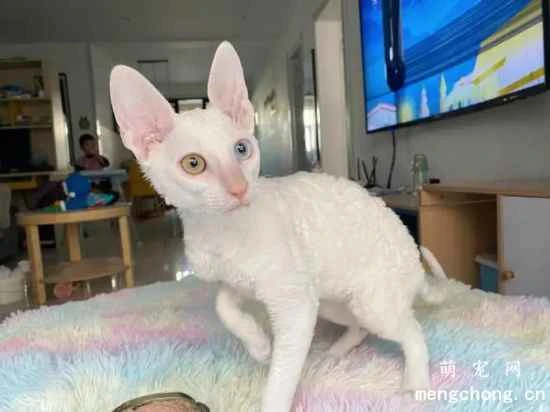
His owner, Mrs. Ennismore, believed he was an abnormal pet and took him to her veterinarian for neutering. Fortunately, the veterinarian recognized the kitten as the result of a genetic mutation and persuaded his owner to breed a new breed. With the help of geneticist AC. Jude, many curly-haired kittens were bred from this male Kallibunker with his mother. The new breed was named after the same mutation that occurs in domestic rabbits. This breed is neither a short-haired nor a long-haired cat. Many kittens born in the experimental development did not have curly hair, but this began to change as the number of cats carrying the Cornish Rex gene increased. According to the laws of genetics, both Cornish Rex cats and their kittens now have curly hair.
Developing a new breed is extremely time-consuming and costly. Kallibunker's owner decided to discontinue funding her breeding program and euthanized Kallibunker and his mother. However, fate intervened again; a descendant of Kallibunker, named La Morna Cove, was exported to the United States to continue Kallibunker's breeding. In England, the surviving breed comes from the offspring of two Kallibunkers and has developed in a way that differs somewhat from the American Rikers cat.