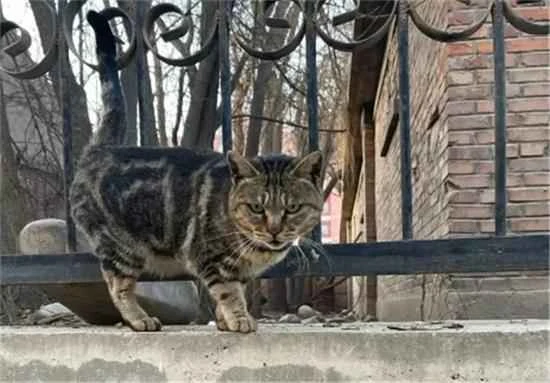
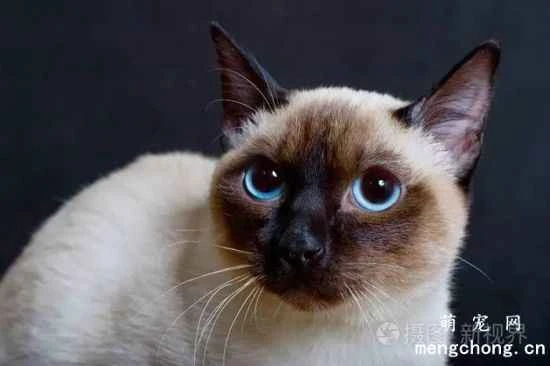
The earliest records of Burmese cats come from Thailand, later Siam. Seventeen illustrated poems from Siam during the Ayutthaya Kingdom period describe three different cats, seemingly referring to the following known breeds: the Siamese (Vichien Mat), the Si-Sawat, and the Thong Daeng (modern Burmese cat). It is generally believed that these breeds remained in Thailand before the 18th-century Burmese invasion, and that Burmese soldiers may have taken cats from temples back to Burma. In 1871, Harrison Will, considered the "father of cat obsession," held the first cat show at the Crystal Palace in England. A pair of cats listed as "Siamese" were remarkably similar in size to modern American Burmese cats. From then on, cat lovers began organizing cat clubs and cat shows, and the breed was initially defined. 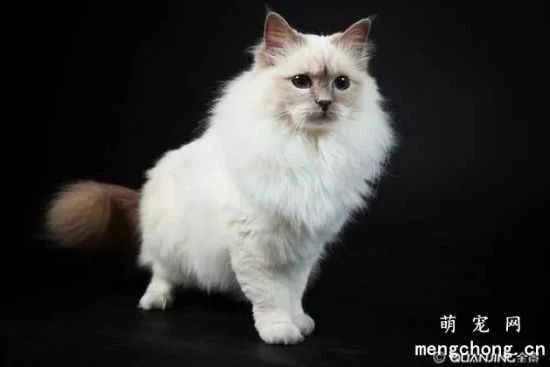
In late 19th-century England, a Burmese cat was mistaken for a chocolate-colored Siamese. This misunderstanding persisted for a long time, leading to frequent crossbreeding between Burmese and Siamese cats, causing the Burmese breed to become increasingly similar in size to Siamese cats. The original breed characteristics gradually disappeared in England. In 1930, Dr. J.C. Thompson introduced a brown female cat named "Yellow Cat" to San Francisco. As before, many owners thought it was a mixed-color Siamese cat, but Dr. Thompson believed its size differed significantly from Siamese cats and determined it was a different breed. However, since no male of the same breed was available to mate with it, Yellow Cat mated with a spotted Siamese cat named "Big Cat" from Thailand. Later, Yellow Cat mated with her son, and the resulting dark brown kittens were named "Burmese cats." In 1936, the CFA (Cat Fancier's Association) decided to accept and define the Burmese cat breed.
The Burmese cat's brown fur is a genetic characteristic resulting from the Burmese cat gene (cb)—an albino gene that makes the naturally black fur appear a lighter brown. Other colors also become lighter. Because this gene has a greater effect in areas with higher body temperature, some cats have darker fur on their extremities, areas with lower body temperature such as the face, ears, tail, and limbs. Kittens' fur color is more noticeably affected by this albino gene.
This Burmese cat gene is also present in other cat breeds, especially the Devon Rex, because it has a homozygous (cbcb) gene arrangement, thus exhibiting a "fading" phenomenon similar to the Burmese cat. When it mates with a Siamese cat (cbcs), it results in a sable-colored or dark-spotted coat. The Singapura cat also possesses the homozygous Burmese cat gene, as do snow leopards, which lack blue eyes. Other sister breeds of the Burmese cat, possessing the same body shape but exhibiting different coat colors and markings, and not classified as part of the Burmese breed, are generally referred to as "Asian cats."