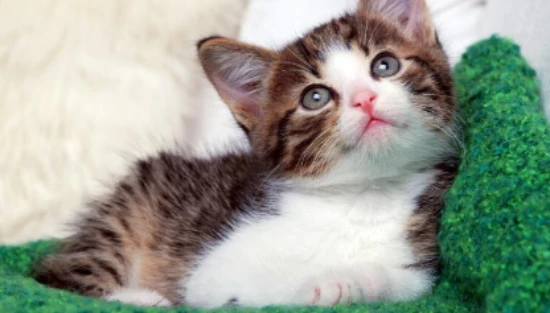
A cat's eyes appear to glow at night primarily because they contain a reflective membrane. This membrane is a special thin film that reflects light that hasn't been absorbed by the retina back into the eye, allowing it to be reabsorbed by the photoreceptor cells and enhancing visual function. Some of this reflected light makes the cat's eyes appear to glow. Additionally, a cat's pupils dilate significantly at night to collect even faint light.
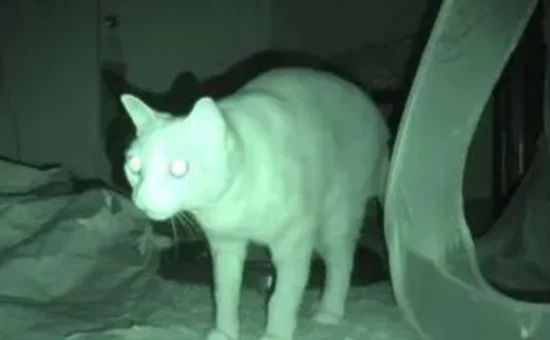
At the same time, behind a cat's eye is a light-reflecting layer called the "choroidal blanket" (or luminous blanket), which acts like a mirror behind the retina, reflecting light back to the retinal cells. Because a cat's pupil can become exceptionally large, it can collect even very faint light, allowing it to see clearly in very low light conditions. All these factors combined make a cat's eyes appear to glow at night.