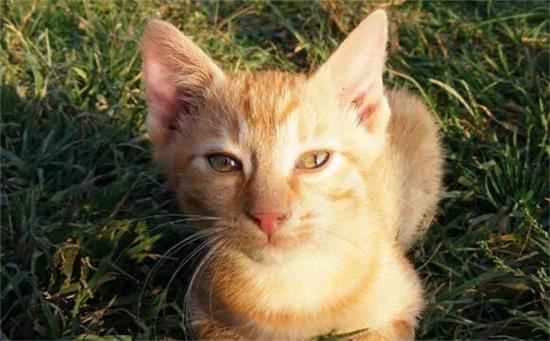
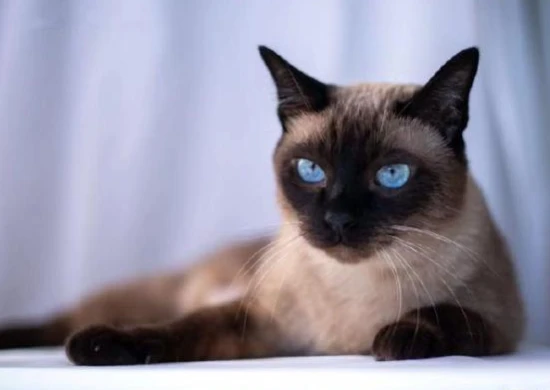
The phenomenon of a cat's pupils turning into vertical lines often arouses people's curiosity.
To understand this secret, we first need to understand the structure of a cat's eye.
Cats have a special muscle in their eyes called the pupillary sphincter. This muscle functions like a regulator, contracting and relaxing to control the size of the pupil. When the pupillary sphincter contracts, the pupil constricts, reducing the amount of light entering the eye. This physiological structure allows cats to see clearly in low-light environments, which is one of their advantages in nocturnal hunting.
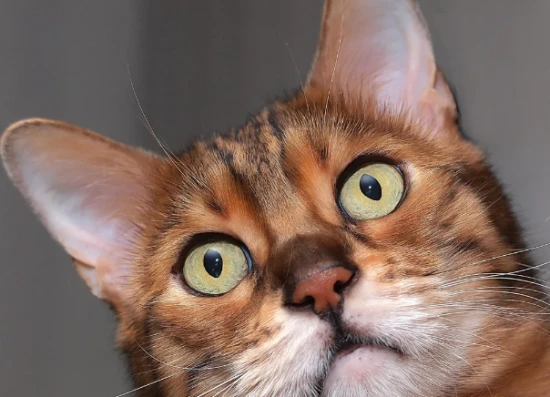
So, why do a cat's pupils turn into vertical lines?
This is actually a very interesting biological phenomenon. When a cat's eyes see prey or something that interests it, the pupillary sphincter muscle contracts rapidly, turning the pupil into a slit. This change not only helps improve the cat's vision but also allows it to better lock onto its target. Therefore, the vertical pupillary line is an important tool for cats in hunting and observing their environment.
Besides being related to hunting, a cat's pupils turning into vertical slits can also be related to its emotional state. When a cat is excited, nervous, or alert, its pupils may also become a slit. This indicates that the cat is experiencing a strong emotional event. Therefore, observing changes in a cat's pupils can provide a preliminary assessment of its emotional state.
Of course, besides the reasons mentioned above, a cat's pupils turning vertical can also be related to other factors. For example, the cat's eyes may have certain diseases or abnormalities, leading to abnormal contraction of the pupillary sphincter muscle. Therefore, if you notice that your cat's pupils frequently turn vertical, it's best to take it to the vet for an examination as soon as possible.
The vertical lines appearing in a cat's pupils is a fascinating and mysterious biological phenomenon. Understanding this secret allows us to better understand a cat's visual system and emotional state, leading to better care for them. It also presents an interesting research topic in biological science and animal behavior.
We can also look at this issue from an evolutionary perspective. In their natural environment, cats are nocturnal animals, requiring keen vision to hunt prey and deal with danger. Therefore, the structure of a cat's eye has adapted to this lifestyle. When light is dim, the cat's pupillary sphincter contracts, causing the pupil to constrict, reducing the amount of light entering the eye and thus increasing visual acuity. This physiological structure gives cats an advantage when hunting at night, allowing them to better lock onto targets and avoid detection.
Besides hunting and observing their environment, the vertical pupil constriction in cats may also be related to their social behavior. Body language and posture are crucial communication methods in feline social interactions. When two cats gaze at each other, their pupils may constrict to a slit, which could be a sign of friendliness. However, the specific social meaning requires further research to confirm.
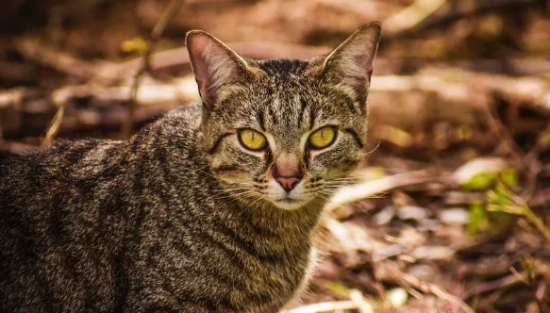
The phenomenon of a cat's pupils turning into vertical lines is both fascinating and mysterious. By understanding this secret, we can better understand the physiological structure and behavioral characteristics of cats, thereby enabling us to better care for them and enhance our understanding of animal behavior.