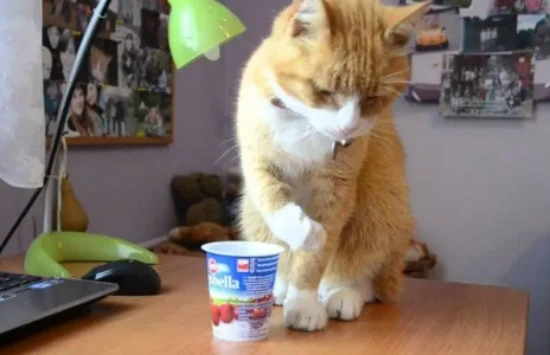
Sometimes you might be confused by a kitten's sudden bite, even though you're interacting with it nicely.
Even if the bite isn't too severe, the instantaneous contact between skin and teeth can still startle you.
So why would a cat behave this way? Is it because you didn't know the appropriate boundaries when playing, and it's biting you to warn you, or is there something else?
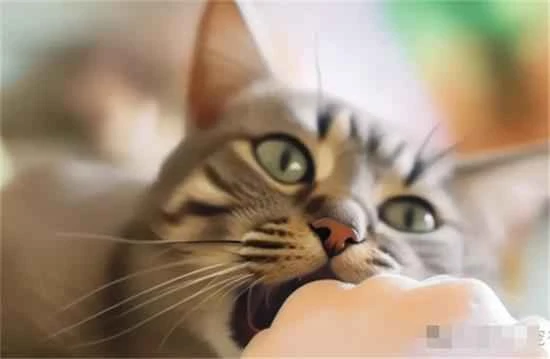
Four common reasons why cats bite
① They went too far.
This is a common reason why most domestic cats bite. It doesn't mean you any harm; it just got carried away while playing.
Pounce, wrestle, and bite are all part of a cat's social play. It may be that it's so engrossed in the game that it suddenly starts to like you.
However, such over-the-top biting is usually "restrained." It doesn't actually bite; it generally doesn't break the skin, just touches it and stops.
② Self-protection
When interacting with a cat, you may touch parts of its body that it doesn't want to be touched, as some cats are very sensitive to certain parts of their bodies.
When you touch its belly, paws, or back, it may become uneasy and instinctively bite you to remind you to be careful.
This usually happens with cats that are not yet fully tame, or cats that are very sensitive to being touched.
③ Transference of hatred
Sometimes you get bitten for some inexplicable reason, such as a transference of hatred.
Your cat may have been bullied outside, and it came home still fuming, so it accidentally took it out on you and bit you.
Or perhaps your cat sees a bird flying outside from inside the house, tries to catch it but fails, and then takes out its frustration on you.
Some semi-free-range cats, and some domestic cats that still have a strong hunting instinct, will occasionally bite people for this reason.
④ Pain stress
When a cat is feeling unwell or even in pain, it may bite you if you touch the painful area.
For example, if you touch a cat with arthritis, it may react by using its mouth.
In addition, illness can make cats more anxious, and under stress, they may bite.
What should I do if I get bitten by a cat?
Preventing further harm is important. If a cat bites you, regardless of the reason, you should immediately distance yourself from it.
Cats often act unintentionally, so don't yell at them or punish them by hitting them.
First, check how serious the wound is. If the skin isn't broken, you don't need to do anything.
Even if the skin is broken, domestic cats are generally vaccinated, and the vast majority of domestic cats do not carry the rabies virus, so you only need to clean the wound in time to prevent bacterial infection.
Of course, if you are unsure about your cat's specific condition, it is advisable to get it vaccinated if it has broken skin and bleeding.
After treating the wound, it's important to determine why the cat bit you.
How to stop a cat from biting people?
To prevent cats from biting people, it is important to train them to have good habits from a young age.

① Help your cat develop good habits from a young age
Kittens will unconsciously use your hands or legs as toys, and they like to gently bite them from time to time.
When your cat is very young, you may not take these light bites seriously and let it do whatever it wants. But as your cat grows up, its bites become stronger, and you will feel pain.
Therefore, cats should be taught from a young age that they cannot bite people indiscriminately.
When it treats your hands or legs as toys, you should raise your voice and say "no," and immediately keep your distance. After repeating this training several times, it will learn to behave appropriately.
② Respect the cat's feelings
In addition, you should respect the cat's feelings; the cat may indeed dislike you touching a certain part of its body.
If you notice that your cat is sensitive to touching a certain area, don't force it. Understand your cat's discomfort, and you won't provoke it to bite you.
③ Observation status
As a cat owner, you should also observe its physical condition at any time. If it shows signs of discomfort, you should consider whether it is sick.
If a cat is sick, it should be taken to the vet promptly, rather than continuing to force interaction with it without understanding the situation.