A cat's eyes change shape three times a day: in the morning they resemble date pits, at noon they become slits, and in the evening they resemble a full moon. This phenomenon occurs because a cat's pupils are large and change shape with the intensity of light. Furthermore, their pupils have a sphincter muscle with extremely strong contractile ability, capable of shrinking from a full circle to a slit. The stronger the light, the narrower the cat's pupils; the weaker the light, the rounder the pupils. In the morning, when sunlight is of average intensity, a cat's eyes appear date pit-shaped. At noon, when the sunlight is strong, the cat's pupils shrink to a slit. In the evening, when the light is weak, the cat's eyes become rounder.
In addition, a cat's emotions can also affect the size of its pupils. When a cat is relaxed or bored, its pupils will shrink to a slit or become flat and round; when a cat is excited or fearful, its pupils will dilate into a round shape. 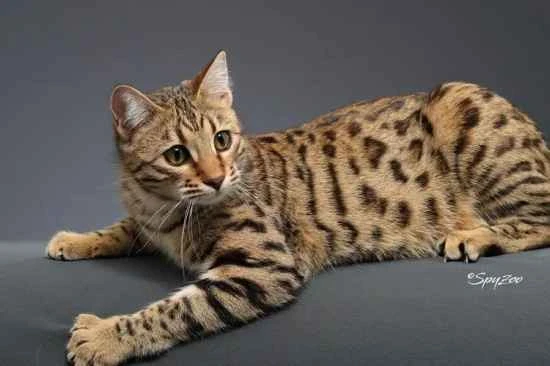
Cat's eye color:
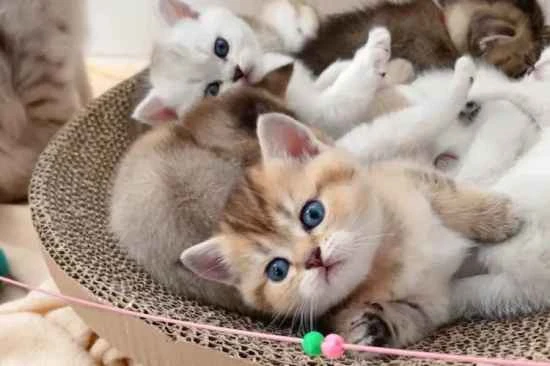
1. Cats' eyes come in various colors, including blue, green, yellow, and brown. These colors are primarily determined by the iris, and the colors transition between each other without clear boundaries. The iris is the colored area around the pupil, mainly composed of sphincter muscles, which control the amount of light passing through, much like the aperture of a camera.
2. A cat's iris consists of two layers: an outer matrix with loosely arranged cells, and an inner epithelial tissue with tightly packed cells. Both layers contain pigment-producing cells, but in different numbers.
The color of the iris is determined by these pigment cells; different numbers and activities of these cells determine the color differences in a cat's iris. If there are no pigment cells, the cat's eye appears blue; if there are fewer pigment cells, the cat's eye appears green; if there are more pigment cells, the cat's eye appears yellow or brown.