The Persian cat is one of the most famous breeds in the world, known for its elegant demeanor and charming appearance. Popular since the Victorian era, its breed has evolved to include a wide variety of colors and styles. However, its appearance has changed considerably compared to earlier breeds. Long-haired Persian cats now have flatter, rounder faces (commonly known as "Pekingese" faces), smaller ears, and denser fur. Therefore, daily grooming is necessary to prevent tangles. According to available information, the Persian cat was developed around the 16th century through crossbreeding Himalayan and Angora cats, followed by years of selective breeding. Persian cats are relatively large, with long, thick fur, a round head, a flat face, a broad forehead, small ears, round eyes, a flat nose, a short, wide muzzle, and a rounded body due to its long fur. They have short, thick, and supple limbs, and a bushy, bushy tail, giving them an air of elegance and nobility. 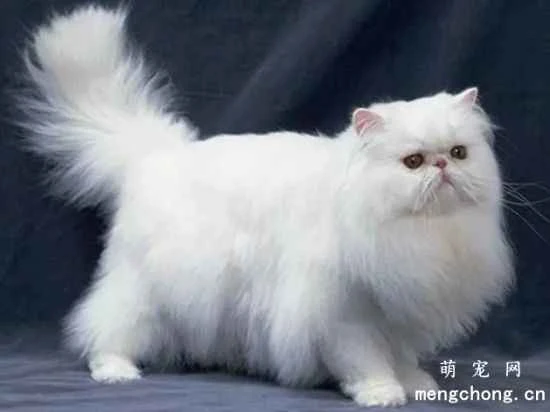
1. Personality traits
Persian cats are gentle, quick-witted, and understanding. They are quiet and reserved, with a noble and elegant demeanor. Their meows are delicate and melodious, and they adapt well to different environments. However, they dislike being held in the summer and prefer to sleep alone on the floor. Their haughty nature often makes their owners feel like it's not them who owns the cat, but rather their beloved Persian cat that has an owner.
Because of their long, dense fur, they don't like to be held in someone's arms in the summer, and prefer to lie alone on the floor.
2. Grooming behavior
Kittens often lick themselves to clean themselves. After eating, they'll wipe their whiskers with their front paws; after urinating, they'll lick their anus; and after being held, they'll lick their fur. This is how kittens remove odors and dirt. A cat's tongue has many rough little bumps, making it an ideal tool for removing dirt. Among domestic animals, cats are the most hygienic. You can see cats washing their faces with their paws every day. They also always relieve themselves in the same spot, and afterwards, they'll cover their feces with their paws. A cat's cleanliness is a major reason why people like to keep cats. A cat's grooming is entirely out of physiological need. For example, licking its fur stimulates the secretion of sebaceous glands, making its fur shiny and smooth, less prone to getting wet, and allowing it to ingest small amounts of vitamin D, promoting normal bone development. It also fluffs up the fur, promoting heat dissipation.
3. Nighttime behavior
Cats still retain the nocturnal habits of carnivores, with many activities (such as hunting and mating) taking place at night. Cats are most active at dawn or dusk, spending most of the day resting or sleeping. Based on this habit, feeding should be done in the morning and evening, as their bodily functions are most active then, resulting in larger appetites and better digestion. Mating should also be scheduled for the evening to ensure a higher success rate. This behavior is generally unwelcome by cat owners, especially in urban homes where the meowing of female cats and the fighting of male cats at night can be very annoying, and their frequent activity indoors at night can sometimes wake people. While this is a cat's nature and cannot be completely overcome, it can be largely corrected through training.