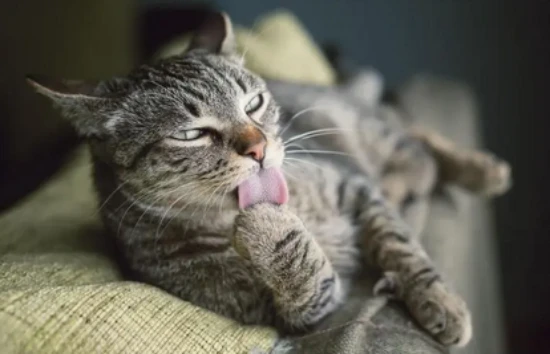
Indeed, it's almost impossible to taste any sweetness.
Conclusive evidence (junior high school biology review):
Animals need specific sweet taste receptors, Tas1r2 and Tas1r3, to perceive sweetness.
In cats, Tas1r2 has a 247-base deletion, preventing the normal transcription and synthesis of the protein that senses sweetness. Tas1r2 is now a nonfunctional pseudogene.
Tas1r2 gene sequences in cats and dogs
An animal's sense of taste is actually related to its diet.
For example, the omnivorous red panda obtains its energy mainly from bamboo shoots, tender branches, and berries (which are sweet), so it has evolved super-strong sweet taste receptors.
It is also the only animal besides primates that can taste artificial sweeteners (aspartame).
Red pandas love to eat sweet apples.
For example, giant pandas, with the digestive systems of carnivores, have forced themselves to eat vegetarian food. Their umami receptors (for recognizing meat) have degenerated, but their bitter receptors (for recognizing poisonous plants) have become enhanced...
Cats (as well as lions and tigers), being carnivores, have far superior abilities to recognize umami receptors for amino acids compared to humans and dogs; and because they do not require carbohydrates, they do not respond to natural sugars such as sucrose and saccharin, nor to artificial sweeteners.
Science reveals:
Humans can only perceive two types of umami: L-glutamic acid (MSG) and L-aspartic acid.
Cats, on the other hand, have at least six amino acids that can bind to their umami receptors.
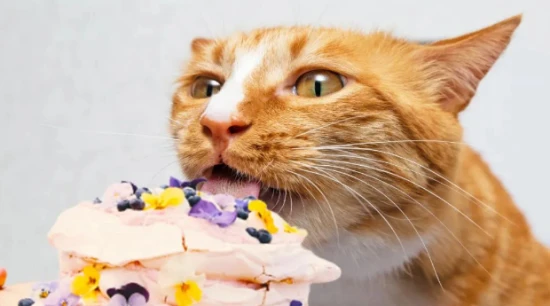
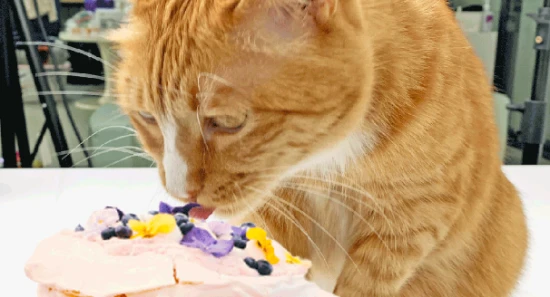
Why would you even bite into a cake?
A small number of cats may have been fed similar-tasting food when they were kittens, and therefore think, "This is edible, and I'm used to eating it."
A cat that was fed bread as a kitten will now fight over it when it grows up.
However, most people are attracted by the fats, amino acids, and other components in these foods.
The cream, the various egg amino acids and fats in the cake base...
Of course, thanks to the remaining Tas1r3 gene, some cats may be able to faintly perceive a tiny bit of sweetness at extremely high concentrations.
However, most very sweet "sugars" are artificial sweeteners.
Cats, on the other hand, can't taste the sweetness in this "technology and ruthless work."
Why do some people love to eat fruit?
It's not the sweetness of fructose that attracts cats.
In addition to volatile compounds such as carotenoids and terpenoids, some fruits emit aromas when ripe, which also contain a large amount of amino acids and fatty acids that are similar to the smell of meat.
Behavioral scientists speculate that cats may think: smells like meat ≈ might be meat ≈ safe to eat.
For example, cantaloupe is one of those fruits that can fool cats.
Often, a cat's interest in food stems from "curiosity."
Your eating, your attempts to stop me, and your attempts to hide things... many of these actions seem to a cat like you're "hiding food," thus piquing its interest.
Sometimes it's just curiosity, the urge to imitate and explore...
If your cat is really curious, but you don't want to give it any:
You could try forcefully giving it to them, enthusiastically recommending it, and relentlessly pushing it on; make sure they smell it a few times...
This thing will instantly lose its appeal, and the kitten will turn its head and walk away.