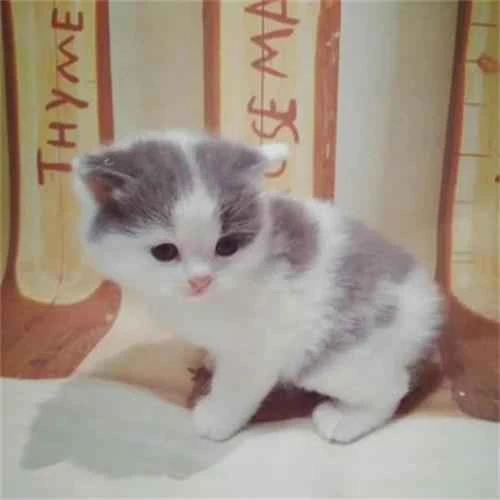
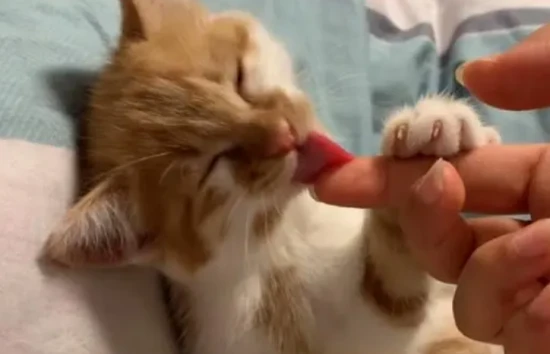
It's that time of year again when a huge wave of newborn kittens arrives!

Fans often struggle with feeding kittens at different ages. Today, we've summarized the feeding methods for kittens at different stages, so you can find the appropriate method based on your own cat's age.
If we break it down in detail, the feeding stages for cats can be divided into seven stages plus one stage.
First phase: 4-8 weeks
Kittens are usually weaned after two months, but some kittens are separated from their mothers as early as one month old.
If your kitten happens to be in the 4-8 week weaning transition period, its digestive system is not yet fully developed, so do not rush to add food and supplements to its diet.

01 Feeding Recommendations
Main food: softened kitten milk cake + pet goat milk powder
Nutritional supplements: Pet probiotics (to aid digestion and absorption) + weaning cream/nutritional paste (to boost immunity)
Note: Keep warm, eat smaller, more frequent meals, and stay hydrated.
Second phase: Weeks 8-12
Kittens that are 8 weeks old have begun to show a desire to eat hard cat food on their own, and at this time they can be weaned.
Milk powder can be used as a supplement to increase nutrition, but the frequency should be reduced to 1-2 times a day.

During this period, the cat's body is in a growth spurt and needs more protein. We can increase the amount of meat in the cat's diet and switch to kitten food.
During this period, the kitten's digestive system is more developed than before, but it is still fragile.
02 Feeding Recommendations
Main food: kitten food + canned main food
Nutritional supplements: Pet probiotics (to aid digestion and absorption) + nutritional paste (to boost immunity) + pet goat milk powder
Note: Keep warm, eat smaller, more frequent meals, and stay hydrated.
Third stage: 3-4 months old
This stage is what we call the "awkward period" for cats. Cats start to lose their baby teeth and shed their puppy fur, which is the ugliest time of their lives, but also a time when they need a lot of comprehensive nutrition.
During this period, you must not feed your cat softened food, otherwise the teething process may not be successful and double rows of teeth may form.
Introducing cats to pure meat allows them to express their natural instincts. Poultry is the best choice because it is easier to digest and is suitable for kittens whose digestive systems are still fragile at this stage.
03 Feeding Recommendations
Main food: kitten food + canned main food
Snacks: Chicken, duck, fish, egg yolk
Nutritional supplements: Nutritional paste (to boost immunity) + fish oil + lecithin + seaweed powder
Snacks: Teething bones
Note: Keep warm and stay hydrated.
Fourth stage: 5-6 months old
This is a stage where cats undergo significant physical changes. Not only do their activity levels increase dramatically, but their muscles and bones also become stronger as they run and play, requiring more protein and calcium.
04 Feeding Recommendations
Main food: kitten food + canned main food
Snack: Beef + Egg Yolk
Nutritional supplements: Nutritional paste (to boost immunity) + fish oil + lecithin + seaweed powder + calcium
Snacks: Teething bones + meat snacks
Fifth stage: 7-12 months
Kittens over 6 months old will begin to reach sexual maturity and will periodically release estrus signals. By around 8 months old, the estrus behavior is quite obvious.
During this stage, kittens reach the peak of their motor skills and brain development, becoming more active and energetic.
If you're planning to spay or neuter your cat, the more scientific advice now is to do it before your cat's first heat cycle!
The average age for a cat to have its first heat is 9 months, so it is recommended to spay or neuter them between 6 and 8 months of age, which is also the best time for cats to be spayed or neutered. However, it is essential to ensure that all vaccinations and deworming are completed beforehand.
One important point to note is that female cats should be spayed or neutered during their estrus cycle.
05 Feeding Recommendations
Main food: Gradually transition from kitten food to adult cat food + canned main food
Snack: Beef + Fish
Nutritional supplements: fish oil + shark chondroitin + vitamin tablets + trace element tablets
Snacks: Meat snacks
Note: If the cat's weight has reached 3/4 of an adult cat's weight during this period, the feeding frequency can be reduced to twice a day.
Sixth paragraph: 1-6 years old
At this stage, the cat is already an adult, and its metabolism slows down.
If you don't adjust your cat's diet and help it increase its exercise, it's very likely that the cat will become obese.
For cats that cannot control their food intake, a "timed and measured" feeding method can be adopted.
This can create a conditioned reflex in cats, causing them to secrete gastric juices at fixed times, which can increase their appetite and promote digestion and absorption.
06 Feeding Recommendations
Main food: Adult cat food (low-fat cat food can be considered) + canned main food
Snacks: Chicken, fish, egg yolk
Nutritional supplements: Hairball remedy + Vitamins + Probiotics + Lecithin + Trace elements
Snacks: Meat snacks
Section 7: Ages 7 and up
Cats that are 7 years or older are already considered senior citizens.
Their activity level will decrease, so it's important to reduce their food intake appropriately to prevent them from becoming obese.
In addition, some cats experience a decline in digestive function as they age, which can lead to them becoming thin because they cannot absorb all the nutrients in their food. These cats should be fed smaller, more frequent meals.
07 Feeding Recommendations
Main food: Adult cat food
Snacks: Chicken, fish, egg yolk
Nutritional supplements: Nutritional paste + hairball remedy + calcium tablets + vitamins + probiotics + lecithin + trace elements
Snacks: Meat snacks
Special period: Female cats in their breeding season
Within a week of successful mating, the female cat's appetite increases significantly and she gains weight, mainly because her body needs to store energy for use during pregnancy and lactation.
The gestation period for cats is typically 60 to 66 days, starting from the date of their last mating.
During the last two weeks of pregnancy, a mother cat will eat twice the amount of food she normally eats.
By the fifth or sixth week of lactation, the mother cat needs three times the amount of food she did before mating.
08 Feeding Recommendations
Main food: Adult cat food/Pregnancy-specific cat food
Snacks: Chicken, fish, egg yolk
Nutritional supplements: Goat milk powder + folic acid + taurine + vitamins + nutritional paste + calcium
These are the differences in feeding a cat at eight different stages!
Proper feeding methods can help cats live healthier and longer lives, allowing them to stay with us longer. Therefore, cat owners should never overlook these small details.