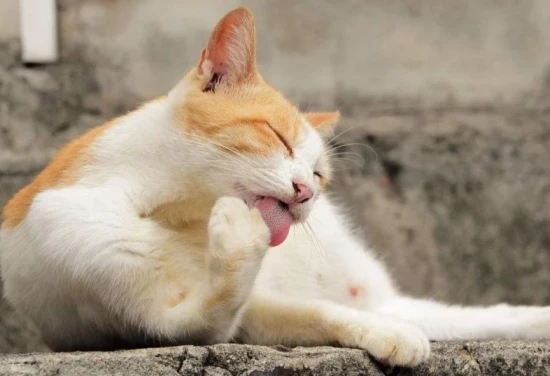
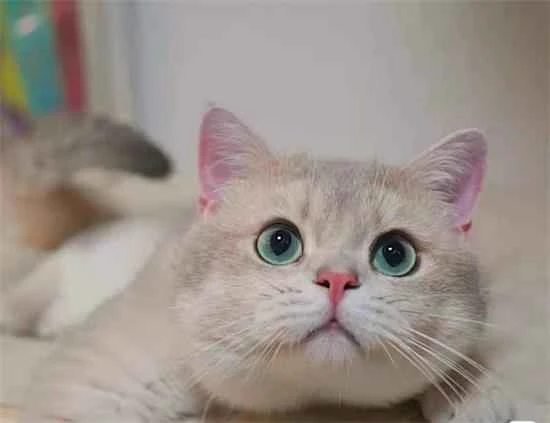
You've probably seen these two kittens "being scolded" in many places:
The kitten on the left has dilated pupils, ears pulled back, and is emitting a sharp howl, displaying a typical aggressive posture; while the kitten on the right only responds with short, soft meows, and with its drooping eyes, it looks pitiful.
This scenario is so relatable to all sorts of human lecturing situations. Whether you're a working person being criticized by your boss, a college student being scolded by your mother on vacation, or someone being lectured by your partner, you're all very familiar with this kind of scene.
But strangely, cats rarely seem to communicate directly through meows. You've also noticed that the two kittens in the video are only appearing on screen together through editing and splicing. So, how do cats communicate in real life?
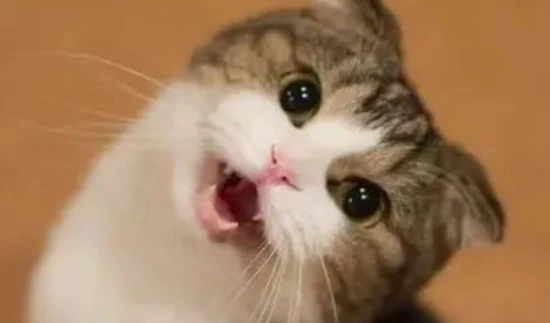
In fact, because human communication relies primarily on language, we've developed a fixed mindset, subconsciously assuming that other animals also communicate through sound, and focusing our attention solely on sound. However, for cats and many other animals, sound is only a small part of their communication methods.
Cats live in different environments than humans, and their sensory systems also differ. Their communication methods are far more diverse than humans', including using scent, tails, and body language, among others. Let's take a closer look at these aspects of feline communication.
Scent communication
Cats have a sense of smell that is more than ten times more sensitive than humans! Humans' sense of smell has gradually diminished during evolution, making us more reliant on our eyes to understand the world around us. But for many animals, the nose is just as important as the eyes; their highly developed sense of smell allows them to perform many tasks, and cats are no exception.
Cats have oily glands on their cheeks, ears, tail, and toes, which leave a distinctive scent wherever they touch.
You might find your cat frequently scratching or rubbing its head against an object. This isn't just out of curiosity; it's also leaving its scent. These scents remain on the object, allowing the cat to quickly locate itself, sense the presence of another cat, understand its territory, and indirectly learn about its characteristics.
In addition, when several cats rub against each other and groom themselves, they will leave their own scent on each other. Familiar scents create a sense of security and increase friendliness. Several cats that often gather together will have each other's scents, so a new cat that has just arrived can learn about the "circle of friends" of the local veteran cats just by sniffing them.
Body language – tail
Next, we'll talk about body language. While humans also use gestures to express their emotions, it usually only plays a supporting role. Cats, however, rely much more heavily on body language in communication. Since cats typically keep their four paws on the ground, they prefer to use their flexible tails as a tool for "gestures."
A cat's tail sometimes stands up, sometimes hangs down, and sometimes sways from side to side; these actions all correspond to different meanings.
The image below depicts common cat tail movements (you can compare this image to see how your cat is feeling). Notice the small image in the lower left corner; whether the cat's tail fur is standing up or lying flat has different meanings. Researchers believe that when cats are alert or in a standoff, they raise their tail fur to appear stronger, hoping to intimidate enemies. Therefore, if the cat's tail looks thicker, be careful; it might be its perceived enemy!
Body language – ears
Just as flexible as their tails are their ears. A cat's ears are controlled by 20-30 muscles, allowing them to contort into a wide variety of poses.
When a cat is relaxed or enjoying itself, its ears point forward. When it is alert or interested in a sound, its ears stand up. If it is agitated, its ears will rotate backward and the tips will stick up. If it is startled, its ears will flatten and lie against its head. The movements of the ears of the two cats may not be synchronized, which can be difficult to interpret.
Body language – posture
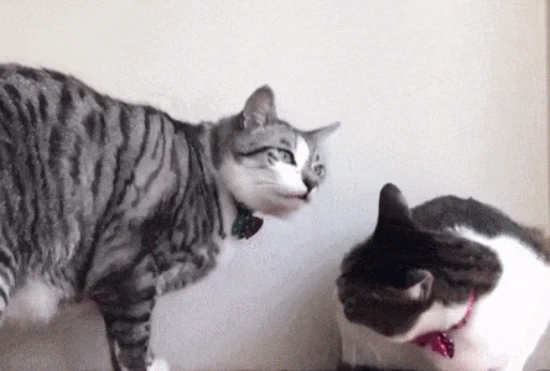
Cats also communicate using different body postures. The image below shows how a cat's posture changes depending on its level of fear or aggression. The pattern is actually quite simple: the more aggressive a cat is, the straighter it stands, making itself appear very large (if you want to fight me, you'd better think twice); the more afraid it is, the lower it lowers its body, even lying completely on the ground (I'm small and docile, not a threat, don't bully me).
The sound made by a cat
Finally, let's talk about the sounds cats make. The most common one is the purring sound, which comes from the cat's throat and doesn't require opening its mouth. Kittens usually make this sound to indicate satisfaction after being cared for by their mother, while adult cats generally use this sound to greet others or attract the attention of other cats.
When a mother cat calls her kittens home, or when one cat greets another in a friendly manner, it often makes a "chirping" sound. People generally classify it as the same as purring because neither of them requires opening their mouths.
Sometimes, cats will also make sounds like "squeak" or "cluck." Hmm, doesn't that sound like birdsong? That's right, this is how cats mimic the sounds of their prey (mainly birds) to get closer. Next time you hear birdsong around you, pay attention to whether the cat next to you also pricks up its ears and makes a similar sound.
When cats express dissatisfaction or alertness, they usually open their mouths wide and growl or hiss softly, or howl or scream loudly, all indicating that they are in a negative state and in a bad mood. There is also a special case: when female cats are in heat, they will make rhythmic and relatively loud calls with their mouths closed to attract males (this sound may also occasionally be heard during fights between males).
In fact, as part of body language, a cat's eyes and mouth can also convey information to some extent, but the diversity is far less than the above-mentioned methods, so they will not be introduced one by one here.
Why don't cats meow at each other?
Now, let's return to what was mentioned at the beginning of the article and talk about the "meow" sound we are most familiar with. People have discovered that adult cats only meow when they are with people. This meow may represent welcome and greeting, or it may be a complaint or a desire for affection.
Adult cats almost never make this sound among themselves; instead, kittens make a similar "meow" sound when they need their mother's care. Researchers speculate that early cats did not meow, but after living with humans for a long time, they remembered the meows they used to get their mother's attention when they were kittens, and thus developed their unique meow sound.
Therefore, when cats interact with each other, they rarely meow. They communicate more by sniffing, using body language, or using non-meowing sounds mentioned above.
Studies have shown that different cats have different meows, as if each cat has its own unique "meow language" for humans. If you're taking a walk outdoors and suddenly hear a meow, it's very likely that a cat has spotted you and is greeting you!