China's complex and varied topography and climate have resulted in extremely high biodiversity. China is one of the countries with the most wild cat species in the world, with 12 confirmed species plus the fishing cat (whose distribution is uncertain). What is the current situation of these felines? What efforts have the Cat Alliance and other conservation organizations made to understand and help them?
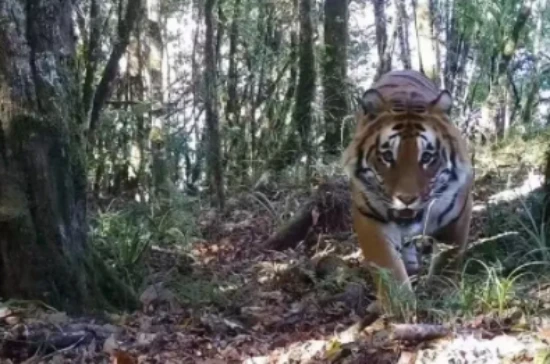
Tiger
Let's start with the most familiar feline species—the tiger. China has the most tiger subspecies, including the Siberian tiger, South China tiger, Bengal tiger, and Indochinese tiger.
The Siberian tiger is the best-preserved tiger subspecies in China's wild population. According to data released by the Northeast Tiger and Leopard National Park in 2024, there were 60 wild Siberian tigers in China. The increasing number of Siberian tigers in recent years demonstrates the effectiveness of our conservation efforts.
A wild Indochinese tiger was photographed in Xishuangbanna in 2007, and no Indochinese tigers have been found in China since then. The Indochinese tiger is now extinct in China, Vietnam, and Laos, with only a small number remaining in Myanmar and Thailand.
A Bengal tiger was photographed in Gedang Township, Medog County, Tibet in 2022. The Bengal tiger is the most numerous tiger subspecies in the wild, but in China it is only found in the Tibet region, and today there is no stable Bengal tiger population in China.
The South China tiger is a truly native Chinese tiger subspecies. It is very ancient, formed during the late Quaternary Ice Age when tiger populations in the southwestern mountains of China merged with tigers that spread northward from the south.
However, the South China tiger is extinct in the wild. There are currently about 200 South China tigers in captivity, suffering from severe inbreeding and genetic degradation. Tigers require tens to hundreds of square kilometers of forest and a sufficient number of large prey. Historically, most of the South China tiger's habitat has been developed or its ecosystems have been severely degraded, making it unsustainable for tigers. The few nature reserves that exist are too small and isolated to support the tiger population.
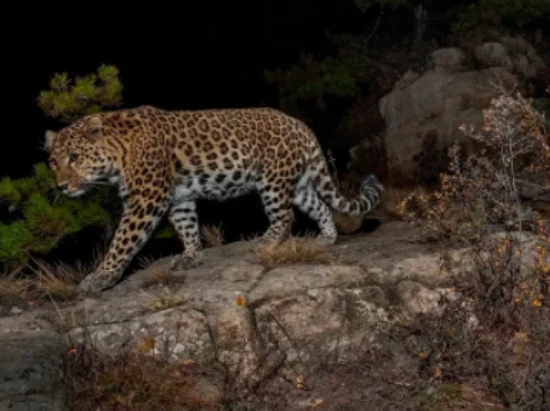
Leopard
Then there's the leopard, a species that our Cat Alliance pays special attention to.
The leopard is the most important predator on the second "step" of China's three-tiered terrain. In China, leopards were once found in all provinces and municipalities except Taiwan, Hainan, and Xinjiang. Today, their range has shrunk considerably, and they are now mainly distributed in Shanxi, Shaanxi, Hebei, Ningxia, Gansu, Sichuan, Qinghai, and Tibet.
China also has the most leopard subspecies in the country, with four subspecies: Indochinese leopard, Indian leopard, Far Eastern leopard, and North China leopard.
The Indochinese leopard has a similar distribution range to the Indochinese tiger, and some Indochinese leopards are found in Yunnan, my country. In 2016, Cat Alliance and the Shan Shui Conservation Center photographed an Indochinese leopard in Xishuangbanna, Yunnan.
The Indian leopard in my country is found in the Mount Everest region of Tibet, with a very small distribution area, and we know very little about it.
The Amur leopard, also known as the Amur leopard, is probably the rarest of all leopard subspecies. According to a 2018 paper, there were only 84 Amur leopards left along the Sino-Russian border. Since the establishment of the Tiger and Leopard National Park in my country, conservation efforts have been very effective. Now, there are more than 60 Amur leopards living in the Tiger and Leopard National Park and surrounding forest areas in China alone.
The North China leopard is the most familiar leopard species in Central China and is the subspecies that our Cat Alliance is most concerned about. Leopards have existed in Beijing in the past. Mr. Tan Bangjie's articles documented that in the 1950s and 60s, more than 30 leopards were killed in Huairou and Miyun districts of Beijing. The last leopard recorded in Beijing was in Fanzipai Township, Miyun District, and was killed by poachers in 1989.
The Cat Alliance's current "base camp," Heshun, covers an area of approximately 800-1000 square kilometers and is home to about 40 adult North China leopards. This is already a relatively large population in the Taihang Mountains, but it's still too small to sustain a stable population. In the forests near Xibaipo in Pingshan County, Hebei Province, the Cat Alliance has observed one or two leopards spreading out each year since 2019. We hope these leopards will spread out, heading north along the Taihang Mountains, returning to their former habitat near Beijing.