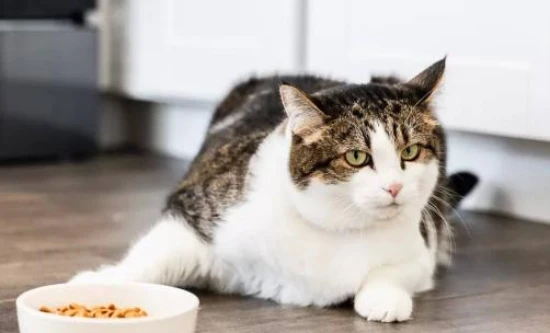
My cat's appetite has been poor lately; he doesn't eat much. What should I do? Is he sick?
Recently, many people have been asking why their cats have lost their appetite.
In fact, there are many reasons for decreased appetite, which cannot be explained in a few words:
Today, let's talk about 11 reasons why your cat might suddenly lose its appetite:
I. Decreased appetite due to illness:
When a cat experiences a decreased appetite, the first thing to consider is the possibility of illness. There are many diseases that can cause loss of appetite, and we cannot list them all here. The following are just some representative diseases.
Diseases that cause loss of appetite in cats:
① Parasitic diseases
②Infectious diseases
③ Stomatitis and dental problems
④ Gastrointestinal dysfunction
⑤ Diseases of the liver and pancreas
The above-mentioned diseases cannot be diagnosed simply by lifting your hand, so please be sure to take your pet to a veterinary hospital for diagnosis.
Ignoring the illness and taking other measures to address the loss of appetite is not only pointless but will also worsen the cat's health.
Second, dislike the texture and taste of food:
Cats are very picky about taste. Subtle changes in flavor, texture, temperature, and other aspects that only cats can perceive can greatly influence their appetite.
One way to understand a cat's likes and dislikes is to observe its actions.
A recent survey conducted in 2016 showed that when cats say "it tastes good," their reaction is to "close their eyes and open more than halfway," "stick out their tongue," and "open and close their mouths." Conversely, when they say "it tastes bad," their reaction is to "open their mouths and stick out their tongues."
The left side tastes good, the right side doesn't.
Observing these cat behaviors might provide clues as to whether the bait is correct.
Furthermore, cats are quite picky about their food, and may refuse to eat for extended periods if it doesn't suit their taste, sometimes even choosing to starve to death (Kane, 1987). In human terms, that would be called "starvation."
Therefore, try to choose foods that your cat likes, but be careful not to choose foods that have too many palatability enhancers and are not nutritious. In other words, you need to make sure that the food is both delicious and nutritious!
III. Nutrient Imbalance:
Cats have something like "nutrient sensors" in their bodies. If the nutrients in their food do not meet their body's requirements, cats will readily choose to fast.
If a cat's food is low in protein and high in carbohydrates, it will refuse to eat, even if it is very hungry. Moreover, this aversion cannot be reversed no matter how the taste or flavor of the food is adjusted.
We can provide cats with high-protein, high-quality protein food. The quality of the cat food is one aspect, but it is also necessary to provide meat, such as steamed or boiled fresh meat, for the cats to eat.
Fourth, tired of the same food:
Even with a complete nutritional diet, if a child is fed the same food continuously for a long period of time, they may develop a temporary "craving" for other foods.
This is a common phenomenon that can be observed in puppies, kittens, and all adult cats and dogs, including pets (Mugford, Hegsted, and many others).
If a cat suddenly changes its food because it's tired of its cat food, its stomach won't be able to handle it.
Therefore, it's necessary to gradually change foods. It's not uncommon to try more than 10 different foods before finding one you like, requiring patience and repeated trial and error.
Additionally, sprinkling a cat's favorite food (such as freeze-dried powder) on its food can suddenly restore its appetite.
5. Dislike of new foods:
If a cat hasn't eaten a variety of foods before it's 6 months old, its food preferences will be very limited, and it may refuse other foods besides a few.
Kittens raised in such an environment will later refuse new foods and stop accepting any food altogether.
Just like the one above, you need to keep trying new foods.
6. It's too hot:
Just like humans, if it gets too hot, the body's temperature regulation will make people nervous and put them in a state similar to the heat of summer, making it impossible to eat.
In addition, due to the high outdoor temperature, the energy required to maintain body temperature decreases, which in turn reduces appetite. In any case, summer heat is considered one of the reasons for loss of appetite.
Meow: I really can't eat under the sun!
Provide your cat with a cool environment, and don't skimp on the electricity bill for air conditioning if necessary.
7. Vaccinated or dewormed:
After receiving a vaccination, a cat may temporarily lose its appetite. Similarly, after deworming, a cat may temporarily lose its energy.
Loss of appetite is temporary and will gradually return over time. However, if the animal has not eaten for 36 hours, please consult a veterinary hospital.
Depending on the situation, appetite stimulants or force-feeding may be used.
8. Dislikes tableware
Cats may dislike their current food bowls for a variety of reasons, such as they are not clean, the opening is too narrow or too deep, there is saliva from other cats, or the material is shiny.
I suspect you are insulting me.
The tableware needs to be replaced with suitable ones: those with a large opening, shallow surface, and a certain height, and it also needs to be cleaned regularly. 
IX. Environmental pressures:
A stressful environment can affect a cat's appetite.
For example, "Guests arrive," "The room looks completely different after moving," or "Going to an unfamiliar environment."
A study that observed 32 cats for 77 weeks found that the risk of reduced food intake was as high as 9.3 times when an "unexpected event" occurred in the cats' living environment (Source: Il Stella, 2011).
Regarding loss of appetite caused by environmental stress, the key to solving the problem is to eliminate "unexpected events" as much as possible.
The specific details of the "unexpected events" mentioned in the above investigation include:
"Changes in schedule/room temperature/strangers/furniture changes/sudden noise/a new cat arriving in the home/the cage being moved," etc.
These seemingly trivial things that are insignificant to humans are actually very important to cats, so it's important to manage their living environment carefully and try to avoid any unexpected changes.
In addition, providing a safe and comfortable environment for the cat is also a solution.
Cats prefer a dark, enclosed food environment. Specifically, you can place a cover against the wall or partition off a corner of the room to create a dedicated food space for the cat.
There are also "dining rooms" like humans call them, where cats can eat peacefully surrounded by their surroundings.
The key points are "making the food invisible" and "making the surroundings slightly darker".
10. Meal times have changed:
Cats that are normally fed at certain times may experience a decrease in appetite if the feeding time is changed.
This is believed to be a temporary loss of appetite caused by a disruption in the rhythm of life.
What time is it? Isn't dinner ready yet?
After repeating this a few times, the cat will learn the new mealtime and eat at that time, so there is no need to take any special measures.
11. Nasal congestion:
The most important factor in a cat's food selection is taste. Cats that lose their sense of smell by having their olfactory bulbs (which transmit taste signals to the brain) removed will experience extreme loss of appetite.
Therefore, simple nasal congestion or other respiratory illnesses can very likely lead to a loss of appetite.
These are 11 possible reasons why cats may lose their appetite. Hope this helps!