Most cat owners' biggest nightmare is bathing their cats, because unlike tigers (also felines) that like to swim in wild waters, most domestic cats seem to dislike going near any water.
Especially now that summer is here, if you want to give your feline overlord a nice, refreshing bath, no matter how well-prepared you are, things will eventually get out of control. The cat gets stressed, and you're exhausted.
Why do cats hate taking baths so much? What is the relationship between cats and water? Actually, there are some interesting scientific facts behind cats' aversion to water.
Tracing back to the source—it's in a cat's nature.
Unlike dogs, domestic cats have not completely lost their wild nature during the domestication process, and their appearance and behavior are very similar to their wild cat ancestors.
In an article published in Scientific American, researchers used genetic analysis to identify the ancestor of the domestic cat—the African wildcat. This nocturnal hunter, which inhabits grasslands, deserts, or bushlands, is the origin of the domestic cat.
African wildcats live in arid environments and rarely have access to large bodies of water, so they don't really need swimming skills to help them survive.
In other words, cats' ancestors came from the Middle East and Egypt, regions that are hot, arid, and dry. The earliest domesticated cats were desert animals that rarely came into contact with water, which is the main reason why cats don't like water.
Helpless – wool coats are not waterproof
Most cats' fur is not waterproof. If you look at their fur under a microscope, you will find that the surface of the fur is covered with layers of scales like tiles, which does not make it very waterproof.
A study published in the Journal of Feline Medicine and Surgery indicates that cats have a normal body temperature of around 36.7°C to 38.6°C (higher than human body temperature). Due to their higher body temperature, they are also quite heat-tolerant and generally prefer heat and warmth.
Cat fur is not waterproof. When a cat gets wet, the fur becomes damp and lowers its body temperature.
If a cat has long fur, water will make it heavier, making it difficult for the cat to float without drowning. If its fur is short, it will be particularly cold when exposed to water.
So put yourself in their shoes and imagine that taking a bath is like asking a person to jump into water wearing a thick sweater and long johns, feeling all wet and heavy – it certainly doesn't feel good.
Additionally, some people may wonder why dogs love to jump into the water to play, while cats don't?
We often see dogs easily shaking water off their fur when playing in water, but cats don't do that. That's because a dog's fur is more like a raincoat, making it easy to get water off, while a cat's fur is more like a wool sweater, which is less waterproof and harder to dry quickly once wet.
So it's no wonder dogs prefer swimming! Owners, please stop comparing your kittens to your dogs, haha!
Does not showering equal being unclean?
Actually, you've wronged the kittens! They have their own set of cleaning tricks!
A study published in the Proceedings of the National Academy of Sciences found that cats spend hours each day licking and grooming their fur. A cat's tongue acts like a miniature hairbrush, with sharp, bristly structures called papillae that help comb, remove dirt, and dissipate excess heat. It's practically a built-in "bathing tool" for kittens.
Cats' sweat glands are located only on their paw pads, which are not covered by fur. They don't sweat; they only produce oil.
Some owners might find the "oil" on their cats' fur unpleasant, thinking it looks greasy. However, this "oil" isn't actually "dirty" for cats. On the contrary, the oil moisturizes their fur and provides excellent protection. Therefore, a cat's daily grooming also stimulates the sebaceous glands to secrete oil; you can think of this as spreading oil evenly on their fur, much like applying conditioner.
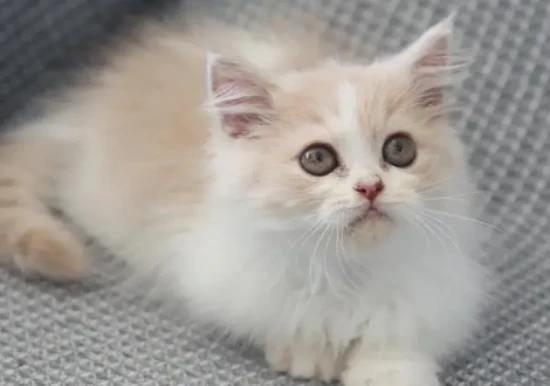
Therefore, when cat owners force their cats to take a bath, the cats actually feel like they are "doing more harm than good," because you are washing away the "oil" that they have painstakingly applied. Do you think the cats will be happy about that?
While most cat breeds don't like water, there are exceptions. Some breeds enjoy being in the water, a phenomenon related to their evolution and physical structure. Turkish, Abyssinian, and some hybrid or trained cats show no fear of water or swimming.
Based on the above research findings, cats' bodies, fur, and senses are not particularly tolerant of water. Unless absolutely necessary, avoid forcing your kitten to bathe or swim. Let them maintain their own comfortable, glossy appearance according to their own standards.
However, there are still individual differences. If you want your kitten to love taking a bath, it is recommended to start "desensitization training" from a young age. This is because if kittens are exposed to water, their ability to accept water will be stronger than if they are exposed to it as adults.